Tag: CV booster

  • Extracurriculars: The Peer Programme

    Extracurriculars: The Peer Programme

    Hi guys,

    We’re bringing Prithvi back on the blog to talk about another extracurricular he’s involved in- the Peer programme. We spoke to him just last month about the Unibuddy programme.

    Last semester, my first interview was with Edna who is also a Peer but from the perspective of students seeking help from the Peer programme. Check out that piece here. Applications for interested Peers are now open and today we will be discussing the Peer programme experience from the persecutive of a Peer to shed some light on how the system works for those interested in applying.

    So let’s hear it from Prithvi!


    Q: Thanks for coming back on the blog again Prithvi. So perhaps we can start with an introduction of the Peer programme for those who are unfamiliar with it.

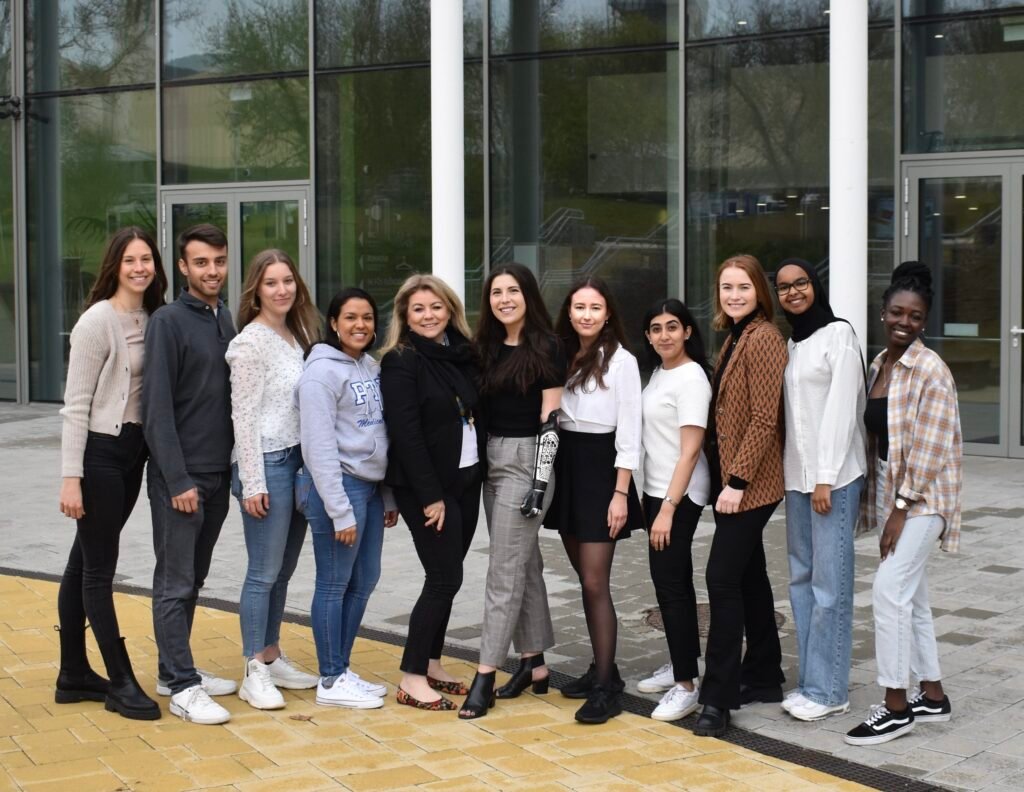
    P: Yes, so the Peer programme is a student organisation within the university, where students (usually lower years) can contact if they have any doubts/enquiries and us ‘the Peers’ address the issues and help them through it.

    Q: Okay! And for how long have you been a Peer?

    P: I’ve been a Peer for 2 years now.

    Q: Oh that’s a while. Definitely not new to this.

    P: Haha yeah, it’s been a while.

    Q: So why did you join? What was the incentive for you?

    P: I joined because I genuinely felt like it would be a good opportunity to help lower-year students with any issues that could come up during their studies. Personally, there were quite a few things I learnt very late in my first few years.

    Q: Admirable intentions! And what exactly do your tasks entail?

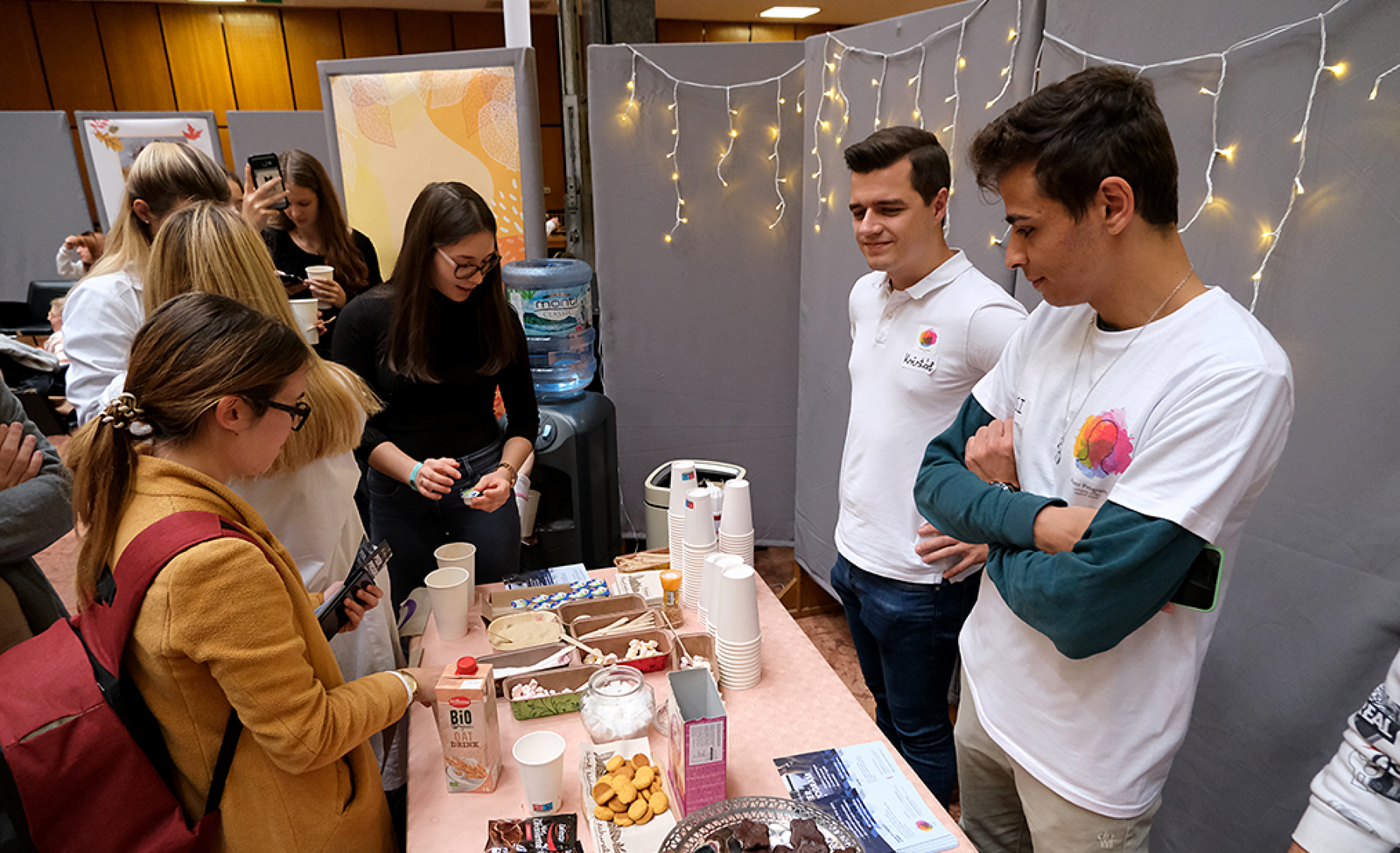
    P: Every semester we have a talk with the Dean’s office (particularly the VD of General Affairs and Student Welfare, Prof. Tényi) about how the programme could be modified or adjusted based on our experiences and observations from the previous semester. We also bring up any unique issues that came up and how the school could adjust its policy slightly in order to avoid the issues in the first place. We make ourselves available to communicate with students and address their problems in order to find an ideal resolution. We have events like “Chill with the Peers”, and Lemonade day at the Aula, where students can freely talk to the Peers in an informal setting and get to know us better. This helps them feel more comfortable contacting us in the future, if needed.

    Q: Okay, and how are students paired up with Peers?

    A: On the website, we are listed with a short description of us and as I previously said, our ‘specialisations’. Based on that, once you click the ‘Contact Us’ button and select for your particular issue, the website filters for the relevant Peers that you could be matched to and you can send a message for the Peer you end up choosing.

    Q: Wow, that’s really cool. It sounds well-organised. So what do you do when you can’t help a student, in cases where you are unsure what to do?

    “A good Peer has to be empathetic and caring, and most importantly has to possess a wide range of knowledge on the problems a student could face…”
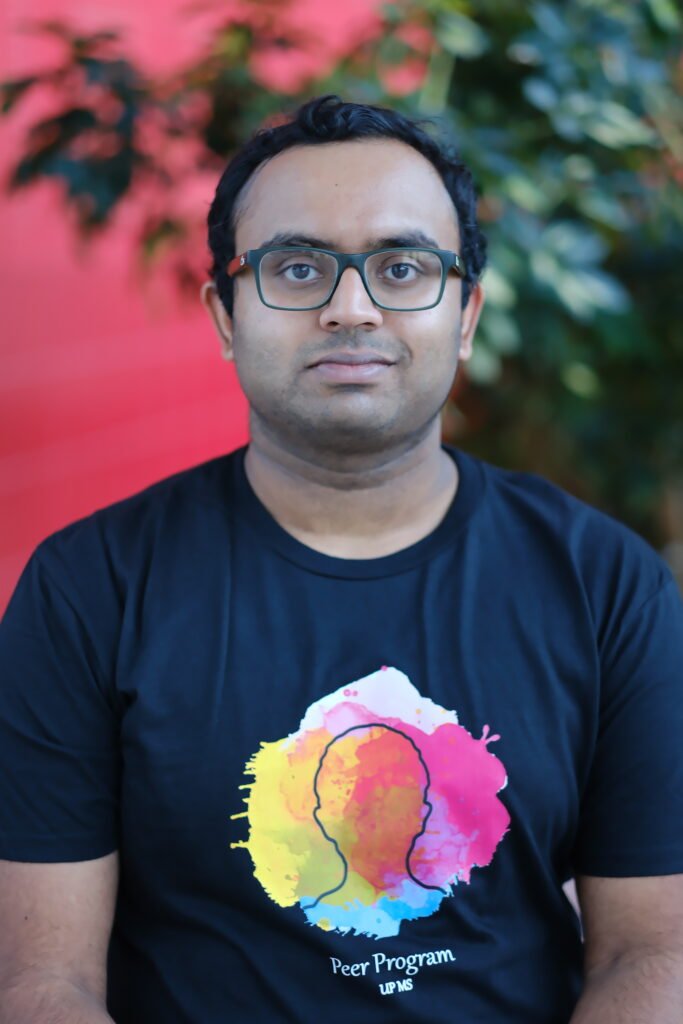
    P: The Peers have a group amongst ourselves, and with permission we can share the problem on that group. Usually there’s at least one other Peer who knows the solution and can assist. Also, our organisers from the student office are in the group and know what to do (especially in legal matters that may require language or local legal knowledge).

    Q: How much time does it take up per week? Is it something a final year student can participate in or would it be too time-consuming?

    P: Per week, I’d say an hour or so. It really depends on how many students you are dealing with and what the issues are. A final year student is an ideal participant in this programme since at that stage they would have come across a wide range of issues and are therefore thoroughly equipped to assist lower-year students. It’s also not terribly time-consuming alongside the rotational year schedule.

    Q: What kind of events are the Peer programme in charge of organising?

    A: Like I previously mentioned, there’s the Chill-with-the-Peers hot chocolate day, the Lemonade day, and for Christmas the Peer Santa Claus day. We also have events amongst ourselves in the Peer Programme.

    Q: Alright. Let’s talk about the ideal Peer. What qualities would you say make a good Peer?

    P: A good Peer has to be empathetic and caring, and most importantly has to possess a wide range of knowledge on the problems a student could face with regards to immigration issues for the internationals, issues with the R.O and NEPTUN, exams, etc.

    Q: Are there any pros of joining the programme?

    A: Well, you get to develop those teamwork skills, working with the other Peers. You are also able to help others, which is a big way to give back to the student community. The programme offers a scholarship which means you get paid. I wouldn’t say the money is enough to be an incentive on its own but it’s still something if that means a lot to someone.

    Q: Any cons?

    P: I wouldn’t really use the word “con”, but it can be a bit difficult at times when you have your own exams and commitments, and at the same have to help someone else. So I would say having good time management and a freer schedule definitely makes things easier for a Peer.

    Q: Completely understandable. I would have a hard time balancing 2nd or 3rd year courses and having to attend to freshman issues in week 13 of the instructional period.

    P: Exactly.

    Q: So have you had any memorable experiences as a Peer?

    P: There’s not one in particular that I can pick out but in general, it’s truly heart-warming when a student acknowledges that coming to us Peers was worthwhile, and even recommends us to their friends. Many students are shy and hesitant to open up to strangers, so it helps that we rely heavily on word-of-mouth within our community. In a way, it’s like a reward system—positive outcomes motivate us to keep doing more.

    Q: Fantastic! And are there any new events or programmes that students can expect from the Peer programme this semester that you can share?

    P: We will have more events in the main building this semester, as well as having more flyers around the school premises to keep our contact with the student community. So stay tuned! Freshmen who who missed the orientation week can still get the chance to meet us.

    Q: Okay, and is there anything else you would like to add?

    P: The Peers are all in different years, different faculties and different nationalities. They have their areas of specialty as well, so my advice to students is to read the bio of the peers thoroughly, so you can streamline your search about which exact peer to contact, since some will have more knowledge about the topic of interest than others. This just helps you get better information quicker. For those interested in joining the peer programme, just apply. You have nothing to lose and we welcome all our Peers with open arms. You won’t be doing this alone.

    Q: Thank you so much for all this information, and for sharing your experience.


    As I said previously, the call for applications is already out and closes in just a day so hurry, hurry, hurry! The deadline is this Friday, 23:59.

    The official requirements state that you need to be an active student with at least two completed active semesters at any of the courses the University of Pécs Medical School or Faculty of Pharmacy. Current PhD students who received their M.Sc, M.D., D.M.D or Pharm.D. from our university are also eligible.

    You will need to fill the application form together with a motivational letter (500-character min.), after which you can be called for an oral interview.

    I personally think it’s a relatively low-stakes extracurricular to involve yourself in. You get to connect with fellow students and this only evolves our little PTE student bubble for the better. It also gives you the opportunity to practice some of those soft skills you will eventually need in your own career whether you go into clinical practice, research or something completely different. Take the opportunity to diversify your experience!


    Author’s note: My sincere appreciation goes to Prithvi for agreeing to be a part of this blog post and giving us his perspective on this topic.
  • Extracurriculars: EGSC

    Extracurriculars: EGSC

    Today’s about our favourite student body, EGSC!

    I’m genuinely excited to discuss the EGSC because it’s a topic that tends to spark a lot of debate. Everyone seems to have an opinion about what’s going wrong or what needs to change within the council.

    Personally speaking, my two years in EGSC were among the most dynamic and challenging experiences of my extracurricular journey, yet they proved to be the most rewarding. By the end of this piece, I hope you’ll see why joining them is a decision worth making.

    So what’s EGSC anyway?

    EGSC is the student representative body in ÁOK for the English and German programs. This covers the medical school students and- surprise, the pharmacy students! Yes pharmacy students, you are absolutely entitled to be a part of this body.

    And what do they do?

    Their main role is to act as a liaison between the university and the students. They address student issues- academic and personal, conveying them when necessary to the appropriate authorities and finding a solution for the student body. And as you may know by now, there’s the event organisation: the White Coat ceremony, Tea & Talk, International Evening, Motivational Speech, amongst others.

    A little bit about my experience.

    I was in EGSC for 2 academic years serving in the capacity of PR rep. At the time, there was a concern that this role would not be able to be filled because of how skill and time-demanding it is but a good friend who knew about some of my hobbies thought I could be useful in PR and urged me to apply. I applied and just as was thought, I was the only PR applicant. I fell into the role quickly and essentially hit the ground running. In that time, I had to make social media posts and event posters. I had to learn how to optimise images for certain displays and even some video editing was required here and there. I made myself available to attend most (if not all) EGSC events for media purposes. It took a bunch of my time and I had to learn how to manage my schedule and balance the duties with academics. Sometimes the two overlapped but that was okay because I thoroughly enjoyed it. As it turns out, walking past a poster in uni that you spent 2 hours working on the night before gives you a dopamine rush.

    As a member of the board, I also had to participate in board activities. These ranged from organising the new white coats for the new 3rd years or taking the new students around the campus during orientation to having meetings with faculty or guiding a student on how to set up and access Amboss.

    There was also critique- hardly ever in person- just online. Because EGSC acts as a representative body for the students, they are also the first line of attack when students do not necessarily get the outcomes they desire. In truth, a student body is also limited in many ways and this one does the best with what they have. It was never taken personally, even the nasty digs, and we just did the best we could as a team. I still recognise it as one of my best moments in PTE. I encourage any student to apply and be able to contribute to the student body.

    Who can join EGSC?

    All active students of the Medical school or Faculty of Pharmacy are eligible to apply. Just as a side note, presidential applicants should either have been an EGSC member for a year already or been a year representative for 2 years.

    EGSC members of the previous board who would like to continue in the following year also have to re-apply, so all positions are really open to any student.

    Can first-year students join?

    Technically, you can. There’s nothing stopping you but I really would not advise joining EGSC in your first year. First year is such a fundamental year where you are trying to find your footing. EGSC activities require anticipating certain situations and planning ahead a lot. This can be a bit difficult to conceptualise if you do not have a first-hand idea of what’s going on. It’s been done before, don’t get me wrong but I think you put yourself and your academic goals at a disadvantage volunteering in such a big way in your first year.

    What posts are available in EGSC?

    • President and VP positions (2 each for the English and German programme): They primarily handle executive roles, delegation duties and academic concerns. They are often in closest contact with university leadership. If you have an eye on this role, you need to come with charm and charisma. You need to have good communication skills and be quick-thinking. Most importantly, you should know how to advocate for your fellow students.
    • Communication contacts (2 for the English and German programme): They are in charge of all things communication- emails, social media, etc. They also create the What’s Up in Pécs posts, keeping students abreast of planned events in Pécs. I would say if you have your eye on this role, you have strong organisational skills, time management and, of course a strong command in whatever language you are studying in. Emails are not sent only in response to students, but also to faculty leadership, external bodies, guests of the university, etc.
    • Dentistry representative: This role is reserved for a student from the dentistry programme who can advocate for the dentistry students. This role is relatively new and was introduced to bring the board’s attention to any issues faced by students in the dentistry programme. You will need to be an advocate for students where you see dentistry students not receiving as much support or help. The role as introduced when it was observed that the board was overwhelming full of GM students who did not have as much knowledge of the goings-on in the other programmes. It is a dream that it would one day be redundant, but till then…
    • Pharmacy representative: Similarly, this role is reserved for a student from the pharmacy programme who can advocate for GYTK students. The role is the same as that of the dentistry rep.
    • PR representative: This role is not language or programme-specific. This role can be quite time-demanding, speaking from experience. The PR rep makes the pretty social media posts and the posters that go up in the university and are flashed on the monitors in the university. Around the time of events, even more work is required in the position. If you have an eye on this role, it’s imperative that you can read and summarise large bits of information to smaller bullet points. You should have an eye for detail and basic design skills. You will need to use certain design programmes like Canva, Adobe Illustrator, even some video editing programmes (iMovie, Final Cut pro,) etc.
    • Secretary: This role is not language or programme-specific. If you have your eye on this role, you should also have strong organisational skills and time management. You will be required to make agendas, plan meetings and take minutes of internal and external meetings and sometimes assist with task allocation.
    • Treasurer: Also not language or programme-specific. This role was once in charge of financial duties. Due to a change in how financial responsibilities are handled, the role is now more of a miscellaneous role, assisting the other members in their roles, especially PR as it can be quite time-consuming. So it is beneficial to have a similar profile as PR and even communications contact.

    How can I join EGSC?

    A call for applications will be put out, typically in the first 2 weeks of the new academic year (so anytime now). Usually a CV and a motivation letter is requested and then all you have to do is wait for the elections.

    What does the election process look like?

    As far as I know, it has always been an electoral process conducted by the group leaders and year representatives. Candidates for each position are asked to prepare a small campaign speech and pitch themselves, after which the attendees (group leaders and year reps) vote. Votes are counted and the new board is announced shortly after the voting process is done.

    I will add that I am not so much a fan of this method as it can quickly become a popularity contest. But I got to understand that there is an obligation for EGSC to open up voting to representatives of the student population- that being the year reps and group leaders, rather than internally conducted interviews for the sake of transparency.

    What are the perks?

    EGSC offers multiple opportunities to develop essential soft skills like leadership, time management (I never needed a planner till I joined!), teamwork, communication, and conflict-resolution- skills that are valuable in both social and professional settings.

    You also have the chance to make a difference, even in small ways. EGSC runs an open-door, walk-in service service throughout the academic year, where students come in with a variety of concerns. Depending on the issue, you could help by simply offering a listening ear and a supportive hug, or by taking more involved actions like accompanying them to the registrar’s office or sending an email on their behalf.

    Another rewarding aspect is being part of the behind-the-scenes work for some of our most popular events. Watching weeks of preparation come to life from the ground up gave me a deeper appreciation for the relationship between hard work and tangible results.

    Working with students from different programs also exposes you to the inner workings of the educational systems within PTE and widens your understanding.

    Lastly, being an EGSC member can boost your Erasmus or POE exchange program applications, giving you an edge with extra points for participation.

    Any cons?

    One downside is the time commitment, which varies depending on your role. Some positions require more time than others, but all roles can become demanding. Even members with lighter duties often step in to support others when the workload becomes overwhelming.

    A common question asked by students is whether EGSC is a paid extracurricular. To the best of my knowledge, up till now there is no remuneration for EGSC members. This is intentional, to attract those with genuine passion and drive to make a difference, rather than those motivated solely by financial incentives.

    Even so, none of these are peculiar to EGSC and many of our extracurriculars have similar cons. There’s a lot more to benefit than lose by joining EGSC.


    This brings us to the end of the piece. Keep your eyes peeled for the Call-for-Applications on EGSC’s Facebook and Instagram pages. I hope everything has been clearly explained, and I trust that when the application period opens, there will be a few more enthusiastic applications coming through.

    Stay safe!

    EDIT: Applications are currently open until 22nd September. Send your CV and motivation letter to egsc[at]aok[dot]pte[dot]hu. This year, not all positions are open so check the listing here to see what you might qualify for.


    Author’s note: The views and opinions expressed in this piece are solely my own and do not represent those of any institution. Any conclusions drawn or interpretations made are personal and should not be attributed to any entity other than myself.

  • Extracurriculars: The Unibuddy Programme

    While we’re in the middle of summer, some of you might be fishing around for some extracurricular activities to join and enrich your student experience against the next academic year. We will be going through some in the next few posts. I personally have been involved in quite a few and can give some information based on my experiences. As you know, I always like to involve other students to get an unbiased opinion and then add mine to kind of top it off. The university has a relatively good selection and the best part is just about any student can join, as long as you have the drive and motivation.

    In this post, we are gonna be talking about the Unibuddies. I was a Unibuddy myself for a year and it was a really great experience. Today, I have interviewed a current 6th year student in the Unibuddy programme, and I will also be giving some information from my POV about it. So let’s get to it, shall we?


    Q: Thank you for being a part of this blog. Let’s start with a little introduction.

    A: Yes. So my name is Prithvi. I live in the UK although originally I’m Indian, and I’m currently a 6th year medical student at the University of Pécs.

    Q: Great! And for those who don’t know, what is Unibuddy exactly?

    A: It’s an online communication platform with your details where prospective students who are interested in academic positions at the university can contact you for more details regarding the admissions process, tips for the interview or any general questions regarding the city or even job prospects after graduating. We also sometimes have to take part in online webinars to advertise the University and answer any questions people might have.

    Q: When did you first become a Unibuddy and for how long have you been a Unibuddy?

    A: I have been a Unibuddy for one year. I believe October last year was when I officially started the programme.

    Q: What was the process of application like? How did you prepare?

    A: It was quite simple really. We had to fill out a form with our details and upload it. Since I was in the Peer Programme as well, I was exempt from the interview and got the position immediately, but I know some of my fellow Unibuddies had to do an official interview with representatives from the Dean’s Office.

    Q: How many hours per week did you dedicate to it?

    A: I’d say about an hour a week.

    Q: Are there any perks of being a Unibuddy?

    A: It is a scholarship programme, so we get paid 15,000 ft per month for 10 months as part of the contract. Also, we have a chance to interact with other Unibuddies who are sometimes in other faculties, or even the ones from our faculty who are in a different year.

    Q: Have you had any negative experiences? Can you share them?

    A: Luckily I haven’t had any negative experiences. But since it’s an online platform sometimes people ask vague questions and when we give responses they don’t reply after that, which is sometimes … awkward!

    Q: What kind of person best fits the Unibuddy role in your opinion?

    A: I would say someone who is outgoing, knows the ins and outs of the major they’re in, as well as someone who speaks fluently to engage in online webinars and taking part in open days at the university.

    Q: Would you recommend this for even final year students?

    A: Yes, definitely!

    Q: Anything else you would like to add?

    A: The application for next year will be announced sometime in September, so stay tuned with the EGSC postings so you don’t miss out on the deadlines!

    Q: Thank you so much for all this information, and for sharing your experience.


    As I said previously, I was a Unibuddy in the same year as Prithvi. We essentially acted as student ambassadors or representatives for the university. The call for applications was put out sometime in September. We had to submit a motivation letter and fill in an official form.

    After your application is assessed, you get invited to an interview. Based on your experience, the interview could be waived. In my case, it was waived because I was a student ambassador (basically a similar role but working with the International Center) for 2 years prior and had actually worked in a similar capacity and with the same Unibuddy platform.

    Once you are approved, you will be invited for a photoshoot to build your Unibuddy profile. You will also be asked to provide a few words about yourself and academic journey at UPMS that will be on the uni website. Here you can access the page of the current Unibuddies to see what to expect.

    Once your profile is set up, you are ready to begin. You will get an intro course about Unibuddy, how to use it and general communication guidelines but aside that, you are now acting as the student liaison between prospective students (and sometimes family) and the university. You won’t always know the answer to some of the questions asked. Sometimes, just a little research is enough to find the answer. You can also ask in the common group with your fellow Unibuddies, you can ask the managers of the programme and you can reach out to the Admissions office to clarify something. I personally reached out so many times to the Admissions office and got very helpful answers.

    Because the student ambassador programme runs concurrently with the Unibuddy programme, you often get students inquiring about other courses that are not offered in the medical school. If the questions are easy enough or you know the answer you can answer them yourself, but when they get specific, it might be more beneficial to refer them to someone else in the programme. On the Unibuddy platform, you are also able to make blogposts and videos to provide more information on the platform. During the academic year, you might be asked to participate in webinars or Open Day events where the office comes in contact with interested students, so that is always a good opportunity to participate in and represent the school.

    All in all, I would say an extra-curricular, this is a pretty easy, mostly low-effort one and if you apply yourself, you can really benefit from the opportunities to improve your presentation skills, public speaking, writing, etc. I did it in my final year and it did not take a toll on my schedule even one bit, so final year students are also encouraged to apply.

    At the end of the year, we had an appreciation dinner and received certificates which was very nice. This past academic year was the first time (to my knowledge) that the programme was run within the medical school and as a previous ISA, I will say I preferred the Unibuddy programme because everything was just a bit more tailored to the medical programme which I am familiar with.

    So that’s that. If you are interested in working as a Unibuddy, keep your eyes open for the call for applications coming in September.

    Author’s note: I would like to extend my gratitude to Prithvi for his willingness to participate in this blog post.

  • International Student Ambassadors- An Interview with Amr and Faith.

    International Student Ambassadors- An Interview with Amr and Faith.

    Hi, fellow PTE students!

    Exciting news from the International Center: they put out calls for new International Student Ambassadors, and believe me, you don’t want to miss out on this opportunity. This is one more thing to add your resumé but even better, it’s a chance to level up your skills while representing our university.

    2023/2024 ISAs

    (more…)
  • The TDK experience: An Interview With Jessica!

    The TDK experience: An Interview With Jessica!

    New week, new post!

    This week brings another interview with Jessica, and this time we will be talking about her experience with the Undergraduate Research Society. If you haven’t already checked out her previous interview on the blog, you can access it here. We previously spoke about her great achievements as a PTE medical student and her student life balance and she shared some great insights with us. Today, she will be talking about her journey in research at PTE and she will also share some tips for those interested in involving themselves in research work at PTE.

    (more…)
  • The Dean’s Essay, Let’s Talk About It

    You may have heard about it before, perhaps in passing or even participated yourself. This week, we have the scoop on the Dean’s Essay, featuring a successful participant. Many Hungarians programme students know about this already, so English programme students, tap in!

    (more…)
  • Szent Imre Hospital (Dél-budai Centrumkórház): My Experience As An International Medical Student.

    Hello! 5th years, especially, this is for you. If you are planning your final year and thinking of what hospitals to go to, I am sharing my experience at Szent Imre Oktatókórház in the 11th district in Budapest. I’ll be giving all the details.

    (more…)
  • PTE Emergency Society: The Scoop

    The Emergency Society will be starting up their programme for the semester next week and registration has already begun and will close on the 16th of February at 17:00. I reached out to the Emergency Society and the President, Lara graciously provided answers to some essential questions. We got the information, so stay tuned!

    (more…)
  • PTE Surgical Society: The Scoop

    The Surgical Society is starting up their programme for the semester next week and in preparation for this, there was an info session yesterday, the 7th of February. I attended it and now I’m back with all the intel.

    (more…)
  • Why You 🫵 Should Be the Next IE Host

    Great news! Our favourite event of the year is just around the corner, on March 9th and I don’t know about you but I’m excited 🙌

    (more…)