Hello everyone. Hope you all had a restful weekend.
If you followed my Update post, I mentioned that I had a friend who took her USMLE step 1 and got her Pass in December last year, a short 5 months after graduating. Today, I’m sharing a short interview with her on her process. We’ll be talking about the preparation process, useful resources and the exam itself. So onto the interview.
Q: Hey girl, So congratulations on passing step 1 of the USMLE. How did you find it?
A: Hey! Thank you. I actually found the whole process rather frustrating. The exam requires you to pay attention to little details so I had to really focus on these.
Q: We personally talked about this before but for the audience, when did you first start seriously considering taking the exam? What drew your attention towards the US as a possibility for residency?
A: I started thinking about it as a possibility in my 5th year. I realised that I wanted to be near family, so after a lot of consideration the US was the best option.
Q: Yes, of course. Honestly it’s the same for me. Having a support system close by can help make residency a more enjoyable process. So, let’s talk about the preparation period. What did that look like for you?
A: Well, I officially started preparing in July 2024, and I took the exam in the 2nd week of December 2024.
Q: 5 months is impressive, and certainly makes it seem less daunting. What did your study schedule look like?
A: I typically split my week. I would start with First Aid for one subject, and later on in the week, I did the UWorld questions for that subject. I also followed a study guide for USMLE that I found online, so that was helpful.
Q: Since you were no longer at the university, where did you usually study? – library, home, café, etc.)
A: I studied at home for the whole period.
Q: What study resources did you use? Was any more useful or less so?
A: First Aid and UWorld were absolute musts. I used Sketchy for Pathology and Microbiology. Dirty medicine was perfect for Biochemistry. Bootcamp videos were also helpful, and I did the free 100 questions on NBME to test myself. I would say most of these were useful and when one resource didn’t work, I was quick to check another out.
Q: Did you take any courses or use tutoring services?
A: Not at all. I would’ve liked to but that wasn’t in my budget.
Q: When did you schedule your exam, and how did you know it was time to schedule it?
A: There was no special landmark or study milestone, so to speak. In October, I just booked the exam. Having a standing date helped me focus a lot more- just knowing I had set that deadline for myself.
Q: That’s a good way to look at it. Which subjects did you find the most difficult? How did you tackle them?
A: Biostatistics, Microbiology, and Cardiology were my weaker subjects. I tried to answer as many questions on them as I could, which helped. Just more exposure.
Q: And which subjects did you find the easiest or most enjoyable?
A: Psychiatry and Neurology.
Q: Did you have any strategies to help you retain information better?
A: I tried to revisit my study material from the previous day every morning before starting a new material.
Q: Spaced repetition for the win! Love that. As the time came closer, I’m sure you were a bit more nervous. What did that final month of preparation look like?
A: During the first half of the month, I was mostly going over topics I found very confusing, but for the second half I spent majority of it on UWorld.
Q: Did you take any assessment tests?
A; Yes, I took one in November and passed, but just at the mark. It helped me identify my weak points at that moment.
Q: How did you structure your last week before the exam?
A: I went through some review notes, and UWorld questions but I mainly rested. The day before the exam, I studied till around 2pm, packed my bag for the exam, and then rested till the next day.
Q: So how did the examination process go for you?
A: We were required to be at the exam centre 30 minutes before the exam time. I just needed to show my scheduling permit and passport/ID card. After the sign-in, I finished 3 question sets. I took my first break for 15 minutes, after which I did 2 more sets and took another break. At this point I was very tired, so I had to take a break after every question set.
Q: How did you feel immediately after finishing the test?
A: Honestly, light-headed. I just needed to sleep.
Q: Looking back, what would you do differently if you had to take it again?
A: I wish I had started going through UWorld questions from my first day of studying. I also wish I had started doing questions with mixed subjects, rather than focusing on one subject per week.
Q: How did you spend the time waiting for your results? I imagine that was a stressful waiting period.
A: I checked my email everyday. I knew it was going to take a while for the results to come out but yeah, I guess you can say I was a bit anxious to just get the results.
Q: After confirming your pass, how did you celebrate?
A: The results arrived 2 weeks after my exam, just before Christmas, so I had a very lovely Christmas celebration.
Q: Now that you’ve successfully passed, do you think PTE gives you all the tools you need to pass it?
A: I would say we cover roughly 70%. Biostatistics seemed completely new and very different compared to how we are taught the equivalent subject, biometrics for example. But with a bit more studying, you will be able to easily catch up. Concepts are the same.
Q: Do you think this is an exam that is passable while in med school and if so, when would you recommend PTE students take it?
A: If you can take it in your 3rd year, that would be perfect. So I would suggest to start studying for it in your 2nd year, this way you’re studying for your usual exams plus the USMLE step 1
Q: Wow, well that’s an interesting take. I would’ve personally said 4th year as the earliest. Okay, I have one interesting question: as we all know, the societal and political climate in the US is now shaping up to be quite different compared to when you started your preparation process. It has made a lot of formerly-aspiring US residents change their minds on the decision. Has that affected your decision in any way?
A: I’m a bit scared to be honest, but at the end of the day it’s not perfect in any one country. As I said, the plus here is that I get to be close to family and this is important to me, so I’ll keep going.
Q: Fantastic. So what’s next for you?
A: I’m currently searching for an externship or observership, while preparing for STEP 2 CK.
Q: Is there anything else you would like to add? Any extra tips for out US residency aspirants?
A: Yes! When practice your questions on UWorld, practice on the timed mode. It will help you adjust to solving the questions in good time. Sure you can fail if you get questions wrong, but you can also fail if you don’t get to finish all your questions in time. The night before your exam, make sure to get a lot of sleep. The exam is mentally tasking and you will need to be well-rested to perform at your best. One last thing- you’re not allowed to share the questions you got on the exam on any platform. If you’re caught, your exam may be cancelled.
Q: Thank you! Congratulations again and I wish you all the best in your preparation process.
There you have it! Step 1 done in 5 short months. It seems daunting; a whole different education system and testing style. But it’s absolutely doable. You are prepared for it at PTE. I personally have not come across many concepts in my own studying that are completely foreign to me. So don’t be fazed by the bulk of material. Start chipping at it as soon as you can. I’ve gotten the study schedule that she used, which you can access here.
And this brings me to an idea. In the past few months, I’ve spoken with a few of fellow students who are also interested in the US route. One thing I’ve come to learn, accountability can be very helpful in this journey- being able to see each other students’ progress, co-ordinate study schedules and keep each other on track. I was thinking, how about we connect? If you would like to join a group solely for this purpose, kindly send an empty email to aulaconversations[at]gmail[dot]com with the title ‘USMLE’, or a DM on Instagram (@aulaconversations) with the word ‘USMLE’. I will set up a group and be in touch with details.
That’s it for now. Next I’ll be talking to 6th years about my written state exam experience, so stay tuned.
Hi guys, It’s week 4 of the semester already. Can you believe it? Time does fly fast and won’t be slowing down either because it’s only a matter of time till you’re logging into NEPTUN to secure those exam spots.
Today, I wanted to feature one of our many inspiring students- Tobias Evason Fredriksen, a current 5th year student in the General Medicine English programme and a worthy recipient of the Outstanding Student of the Year 2024 award for the 23/24 4th years.
While we learn from those above us- the professors, doctors and researchers, it’s just as important to learn from those beside us, our fellow students. So today, Tobias will be sharing his journey as a medical student here in PTE and how he’s navigated the path to success.
Q: Thank you for agreeing to be a part of this interview. To start off, could you tell us a little bit about yourself?
T: Thank you for having me! I’m from Norway. I’m currently in my fifth year of medical studies at the University of Pécs. Throughout my education, I’ve developed a particular interest in cardiology and infectious diseases. This has shaped my focus during clinical rotations. Like most of my fellow students, I’m really passionate about medicine and excited as to what the future brings!
Q: Excellent. So just to go back a little, what motivated you to pursue medicine and why at PTE?
T: Medical science has always piqued my curiosity. Even though no one in my immediate family was in the medical field, I was determined to be the first. A close friend of mine who intended to study here introduced me to PTE, and it was via this relationship that I became aware of the option. At the time, we could enroll in what was commonly known as the “Bjørknes Program”—which has since changed its name to ONH. Thanks to this, I was able to finish my first year of the basic module in Norway, even though the COVID-19 outbreak made a large portion of it online. This setup was ideal, giving me a solid foundation before transitioning to full-time studies at PTE.
Q: Oh so you didn’t have your first year here. Regardless, your first few semesters here had to have been quite a big transition. The transition can be overwhelming with the amount of material to learn and the demanding schedule. How have you experienced the educational system from your second year up until now, and how have you adapted to its challenges?
T: So the first year in Norway came with its share of difficulties but, all in all, went pretty smoothly. It wasn’t until I began second year here that I truly realised how challenging becoming a doctor would be. The volume of knowledge required, and the level of detail expected on exams increased significantly! I also realised that the examination procedure itself is nearly scientific in nature; you have to know not just the material, but also what your particular professor or examiner values. It’s important to respect the faculty members, as they usually know what’s best.
One of the biggest challenges has been the feeling of uncertainty about passing an exam or whether my knowledge will get me a good grade- rumours from other students, particularly those about failing due to an oddly specific question add to this uncertainty. My advice would be to take such rumours with a pinch of salt—most of the time, they aren’t as bad as they sound.
All in all, the most difficult part has been managing the theoretical requirements as well as learning how to interact with and comprehend various instructors. Some instructors are stricter than others, but that’s just part of the process; this doesn’t really change with time.
Q: This year, you earned the prestigious title of Outstanding Student of the Year in the English General Medicine program for your year, which is a remarkable achievement. Was this your first time receiving this award?
T: Yes, this is my first time receiving the Outstanding Student of the Year award in the English General Medicine program. I’m incredibly appreciative of the acknowledgment, and it’s an amazing honour.
Q: My sincere congratulations to you! It’s no easy feat. Was this a goal you actively worked toward, or did you simply focus on doing your best and happen to achieve it? What adjustments or strategies did you implement to secure this prestigious title?
T: To be honest, I didn’t even know this award existed! I understand it may come as a shock, but I have never been one to focus on awards or prizes. I remember witnessing some students being awarded at the Opening ceremony, and now I understand the reason! My focus has always been on working hard for my own growth and to become more knowledgeable for the sake of my future patients. Though I didn’t specifically aim for this title, I believe that my commitment to my studies has ultimately resulted in this achievement.
“When I study, I decide beforehand that I want to fully understand a topic, and I’ll keep going until I feel like I’ve grasped it.”
Q: That is a great mindset to have and definitely one that moulds a model doctor. For students who are curious about your process, could you share a bit on how do you prepare for tests and exams? What are your go-to study techniques?
T: I have never strongly supported any particular study method. I am aware of several widely-used methods, such as the Pomodoro Technique, but I think it is important for each person to discover what method suits them best. For me, the focus is on jotting down my own notes, frequently using pen and paper, and occasionally collaborating with my roommate. When I study, I decide beforehand that I want to fully understand a topic, and I’ll keep going until I feel like I’ve grasped it. If it takes three hours or more, I’ll take a longer break. If it takes less time, I take a shorter break.
I also recommend attending lectures. I understand that the quality of lectures may differ, but even if a lecture is not excellent, you can still passively absorb information while reading something else. Frequently, instructors have 30 slides, yet they use 30 minutes of the 45-minute session focusing only on two or three of them. That’s a clear sign of what will probably be included in the exam. Plus, being present at lectures helps build familiarity with the professors, which can be helpful when exam time comes around.
Q: Okay, and are there any special resources you use outside of university resources? Is there any you would recommend?
T: Textbooks are usually a reliable source of information, but they may occasionally provide excessive detail. However, I rely on them frequently to reinforce my comprehension. Besides that, I mainly depend on university resources and not much else. I primarily rely on my own notes, as well as notes that are exchanged with my classmates. In my opinion, these individual and joint notes are typically the most beneficial.
Q: It sounds like you have quite an efficient system in place. So outside of the classroom, are you involved in any extracurricular activities?
T: I’m not currently involved in any extracurriculars, aside from some TDK (Student Research) work with the biochemistry department, which is related to the thesis I’m writing.
Q: Oh wow. Could you share a bit about your thesis? Perhaps the working title?
T: Yes, of course. The title is still a work in progress, but my thesis focuses on evaluating the therapeutic potential of benzofuran derivatives in the treatment of breast cancer.
Q: And do you have any hobbies or activities you enjoy?
T: Currently, I don’t have particular interests, but I make an effort to remain physically active when possible. I usually prioritise spending time with friends to relax and cope with stress. Spending time with them gives me a break from the academic pressure and keeps me balanced.
Q: How do you prioritise between your academic schedule, extracurriculars, social life, and personal hobbies? How do you structure your semesters to maximise success?
T: I rely on my calendar to keep track of important dates and deadlines, but otherwise, I tend to approach each day and its challenges as they come. I aim to keep things simple and concentrate on what requires immediate attention.
Q: Have there been any courses that you have found particularly challenging?
T: I found Neuroanatomy and Pharmacology to be the most difficult subjects. I didn’t discover any magic formula for these challenges; I realised that the key to overcoming them is staying dedicated to studying and putting in effort consistently.
Q: Are there any specific professors or mentors who have played a significant role in your academic success?
T: Professor Rékási from the Anatomy department and my supervisor, Professor Kovács from the biochemistry department, have played significant roles in my academic journey. Professor Rékási helped me build a strong foundation in anatomy (which is essential), while Professor Kovács has been instrumental in guiding me through my thesis work and research.
Q: What has been your most memorable experience in PTE so far?
T: The white coat ceremony was definitely one of my most memorable experiences at PTE. It was a significant milestone that reminded me of all the hard work I had put in up to that point.
Q: If you could go back to the beginning of your academic journey here, is there anything you would do differently?
T: No, the only difference would have been that I would have been more confident from the beginning. Reflecting on the past, I understand that having more confidence in myself and my skills could have eased the journey
Q: With regards to the future, what are your future career aspirations and how have your academic experiences shaped those goals?
T: Even though I have certain goals and specialties in mind, like cardiology or infectious diseases, my aspirations continue to evolve as I progress through my studies.
Q: Fantastic. And finally, can you give a piece of advice for the first year students?
T: My advice for first-year students is simple: trust in yourself and work hard. The journey can be overwhelming at times, but believing in your abilities and staying dedicated will take you far. Staying consistent and being confident are crucial in overcoming the upcoming obstacles.
Q: Perfect. Thanks a lot for your time.
There you have it.
For Tobias, this award was the result of consistent hard work, driven by a genuine passion for learning and excelling. As Stephen King once said, “What separates the talented individual from the successful one is a lot of hard work” and Tobias exemplifies that perfectly.
There’s no magic formula for achieving your goals—no shortcut, no quick fix. Success is determined by the effort you put in and the results you achieve. So, start pushing and keep pushing. The decisions you make today will shape your future. And always remember: work smart, not just hard.
Congratulations to the all the students who were awarded the Outstanding Student of the Year prizes, including Tobias and Jessica, who was featured earlier this year on the blog.
Author’s note: My sincere appreciation goes to Tobias for generously participating in this interview and sharing his experiences to inspire fellow students in their academic and personal growth. I wish him the very best as he continues his journey into a very promising career.
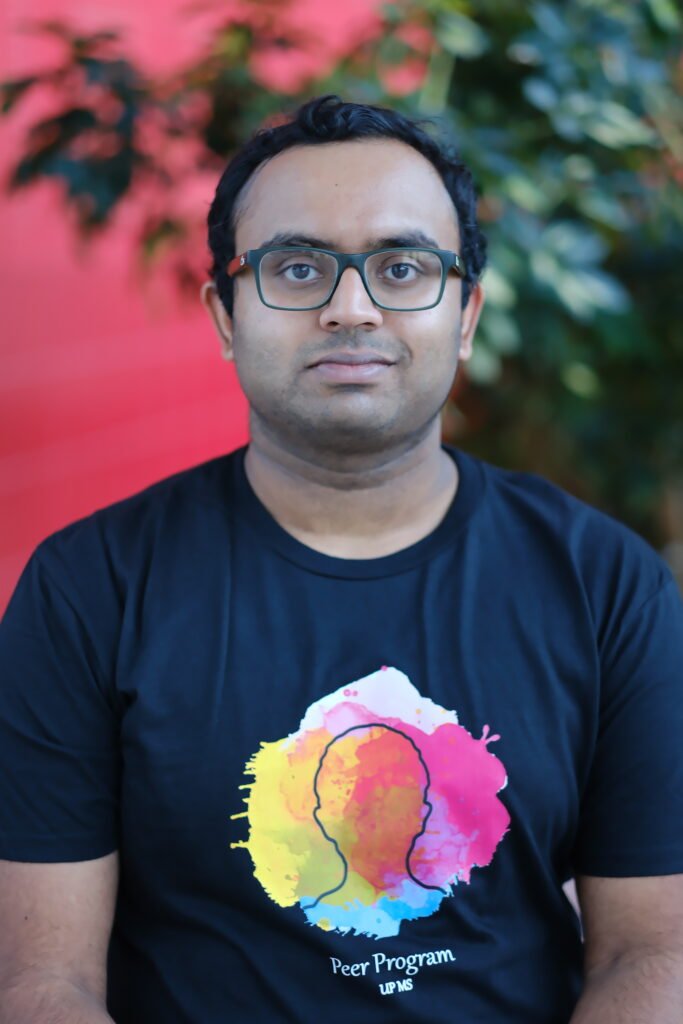
We’re bringing Prithvi back on the blog to talk about another extracurricular he’s involved in- the Peer programme. We spoke to him just last month about the Unibuddy programme.
Last semester, my first interview was with Edna who is also a Peer but from the perspective of students seeking help from the Peer programme. Check out that piece here. Applications for interested Peers are now open and today we will be discussing the Peer programme experience from the persecutive of a Peer to shed some light on how the system works for those interested in applying.
So let’s hear it from Prithvi!
Q: Thanks for coming back on the blog again Prithvi. So perhaps we can start with an introduction of the Peer programme for those who are unfamiliar with it.
P: Yes, so the Peer programme is a student organisation within the university, where students (usually lower years) can contact if they have any doubts/enquiries and us ‘the Peers’ address the issues and help them through it.
Q: Okay! And for how long have you been a Peer?
P: I’ve been a Peer for 2 years now.
Q: Oh that’s a while. Definitely not new to this.
P: Haha yeah, it’s been a while.
Q: So why did you join? What was the incentive for you?
P: I joined because I genuinely felt like it would be a good opportunity to help lower-year students with any issues that could come up during their studies. Personally, there were quite a few things I learnt very late in my first few years.
Q: Admirable intentions! And what exactly do your tasks entail?
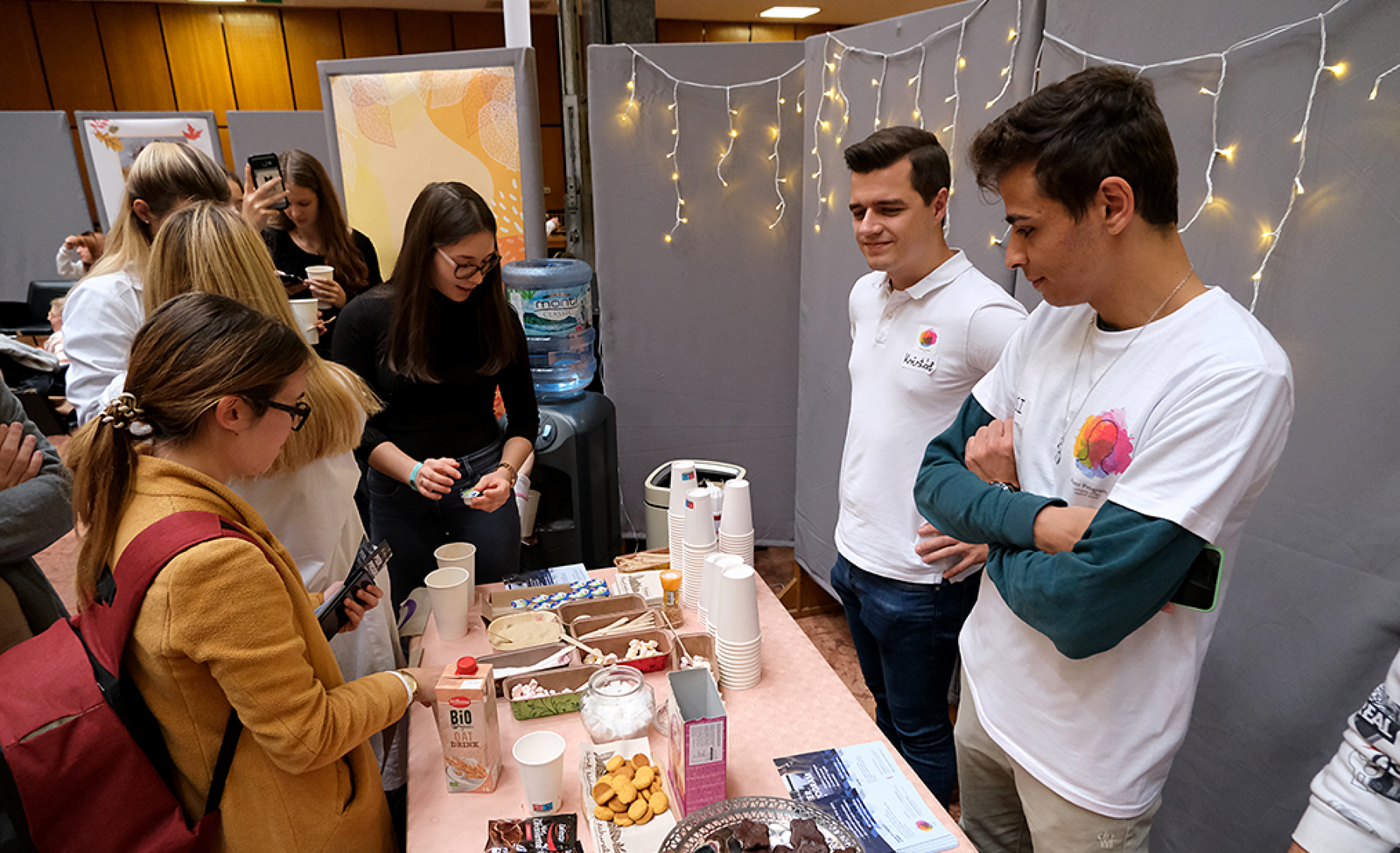
P: Every semester we have a talk with the Dean’s office (particularly the VD of General Affairs and Student Welfare, Prof. Tényi) about how the programme could be modified or adjusted based on our experiences and observations from the previous semester. We also bring up any unique issues that came up and how the school could adjust its policy slightly in order to avoid the issues in the first place. We make ourselves available to communicate with students and address their problems in order to find an ideal resolution. We have events like “Chill with the Peers”, and Lemonade day at the Aula, where students can freely talk to the Peers in an informal setting and get to know us better. This helps them feel more comfortable contacting us in the future, if needed.
Q: Okay, and how are students paired up with Peers?
A: On the website, we are listed with a short description of us and as I previously said, our ‘specialisations’. Based on that, once you click the ‘Contact Us’ button and select for your particular issue, the website filters for the relevant Peers that you could be matched to and you can send a message for the Peer you end up choosing.
Q: Wow, that’s really cool. It sounds well-organised. So what do you do when you can’t help a student, in cases where you are unsure what to do?
“A good Peer has to be empathetic and caring, and most importantly has to possess a wide range of knowledge on the problems a student could face…”
P: The Peers have a group amongst ourselves, and with permission we can share the problem on that group. Usually there’s at least one other Peer who knows the solution and can assist. Also, our organisers from the student office are in the group and know what to do (especially in legal matters that may require language or local legal knowledge).
Q: How much time does it take up per week? Is it something a final year student can participate in or would it be too time-consuming?
P: Per week, I’d say an hour or so. It really depends on how many students you are dealing with and what the issues are. A final year student is an ideal participant in this programme since at that stage they would have come across a wide range of issues and are therefore thoroughly equipped to assist lower-year students. It’s also not terribly time-consuming alongside the rotational year schedule.
Q: What kind of events are the Peer programme in charge of organising?
A: Like I previously mentioned, there’s the Chill-with-the-Peers hot chocolate day, the Lemonade day, and for Christmas the Peer Santa Claus day. We also have events amongst ourselves in the Peer Programme.
Q: Alright. Let’s talk about the ideal Peer. What qualities would you say make a good Peer?
P: A good Peer has to be empathetic and caring, and most importantly has to possess a wide range of knowledge on the problems a student could face with regards to immigration issues for the internationals, issues with the R.O and NEPTUN, exams, etc.
Q: Are there any pros of joining the programme?
A: Well, you get to develop those teamwork skills, working with the other Peers. You are also able to help others, which is a big way to give back to the student community. The programme offers a scholarship which means you get paid. I wouldn’t say the money is enough to be an incentive on its own but it’s still something if that means a lot to someone.
Q: Any cons?
P: I wouldn’t really use the word “con”, but it can be a bit difficult at times when you have your own exams and commitments, and at the same have to help someone else. So I would say having good time management and a freer schedule definitely makes things easier for a Peer.
Q: Completely understandable. I would have a hard time balancing 2nd or 3rd year courses and having to attend to freshman issues in week 13 of the instructional period.
P: Exactly.
Q: So have you had any memorable experiences as a Peer?
P: There’s not one in particular that I can pick out but in general, it’s truly heart-warming when a student acknowledges that coming to us Peers was worthwhile, and even recommends us to their friends. Many students are shy and hesitant to open up to strangers, so it helps that we rely heavily on word-of-mouth within our community. In a way, it’s like a reward system—positive outcomes motivate us to keep doing more.
Q: Fantastic! And are there any new events or programmes that students can expect from the Peer programme this semester that you can share?
P: We will have more events in the main building this semester, as well as having more flyers around the school premises to keep our contact with the student community. So stay tuned! Freshmen who who missed the orientation week can still get the chance to meet us.
Q: Okay, and is there anything else you would like to add?
P: The Peers are all in different years, different faculties and different nationalities. They have their areas of specialty as well, so my advice to students is to read the bio of the peers thoroughly, so you can streamline your search about which exact peer to contact, since some will have more knowledge about the topic of interest than others. This just helps you get better information quicker. For those interested in joining the peer programme, just apply. You have nothing to lose and we welcome all our Peers with open arms. You won’t be doing this alone.
Q: Thank you so much for all this information, and for sharing your experience.
As I said previously, the call for applications is already out and closes in just a day so hurry, hurry, hurry! The deadline is this Friday, 23:59.
The official requirements state that you need to be an active student with at least two completed active semesters at any of the courses the University of Pécs Medical School or Faculty of Pharmacy. Current PhD students who received their M.Sc, M.D., D.M.D or Pharm.D. from our university are also eligible.
You will need to fill the application form together with a motivational letter (500-character min.), after which you can be called for an oral interview.
I personally think it’s a relatively low-stakes extracurricular to involve yourself in. You get to connect with fellow students and this only evolves our little PTE student bubble for the better. It also gives you the opportunity to practice some of those soft skills you will eventually need in your own career whether you go into clinical practice, research or something completely different. Take the opportunity to diversify your experience!
Author’s note: My sincere appreciation goes to Prithvi for agreeing to be a part of this blog post and giving us his perspective on this topic.
While we’re in the middle of summer, some of you might be fishing around for some extracurricular activities to join and enrich your student experience against the next academic year. We will be going through some in the next few posts. I personally have been involved in quite a few and can give some information based on my experiences. As you know, I always like to involve other students to get an unbiased opinion and then add mine to kind of top it off. The university has a relatively good selection and the best part is just about any student can join, as long as you have the drive and motivation.
In this post, we are gonna be talking about the Unibuddies. I was a Unibuddy myself for a year and it was a really great experience. Today, I have interviewed a current 6th year student in the Unibuddy programme, and I will also be giving some information from my POV about it. So let’s get to it, shall we?
Q: Thank you for being a part of this blog. Let’s start with a little introduction.
A: Yes. So my name is Prithvi. I live in the UK although originally I’m Indian, and I’m currently a 6th year medical student at the University of Pécs.
Q: Great! And for those who don’t know, what is Unibuddy exactly?
A: It’s an online communication platform with your details where prospective students who are interested in academic positions at the university can contact you for more details regarding the admissions process, tips for the interview or any general questions regarding the city or even job prospects after graduating. We also sometimes have to take part in online webinars to advertise the University and answer any questions people might have.
Q: When did you first become a Unibuddy and for how long have you been a Unibuddy?
A: I have been a Unibuddy for one year. I believe October last year was when I officially started the programme.
Q: What was the process of application like? How did you prepare?
A: It was quite simple really. We had to fill out a form with our details and upload it. Since I was in the Peer Programme as well, I was exempt from the interview and got the position immediately, but I know some of my fellow Unibuddies had to do an official interview with representatives from the Dean’s Office.
Q: How many hours per week did you dedicate to it?
A: I’d say about an hour a week.
Q: Are there any perks of being a Unibuddy?
A: It is a scholarship programme, so we get paid 15,000 ft per month for 10 months as part of the contract. Also, we have a chance to interact with other Unibuddies who are sometimes in other faculties, or even the ones from our faculty who are in a different year.
Q: Have you had any negative experiences? Can you share them?
A: Luckily I haven’t had any negative experiences. But since it’s an online platform sometimes people ask vague questions and when we give responses they don’t reply after that, which is sometimes … awkward!
Q: What kind of person best fits the Unibuddy role in your opinion?
A: I would say someone who is outgoing, knows the ins and outs of the major they’re in, as well as someone who speaks fluently to engage in online webinars and taking part in open days at the university.
Q: Would you recommend this for even final year students?
A: Yes, definitely!
Q: Anything else you would like to add?
A: The application for next year will be announced sometime in September, so stay tuned with the EGSC postings so you don’t miss out on the deadlines!
Q: Thank you so much for all this information, and for sharing your experience.
As I said previously, I was a Unibuddy in the same year as Prithvi. We essentially acted as student ambassadors or representatives for the university. The call for applications was put out sometime in September. We had to submit a motivation letter and fill in an official form.
After your application is assessed, you get invited to an interview. Based on your experience, the interview could be waived. In my case, it was waived because I was a student ambassador (basically a similar role but working with the International Center) for 2 years prior and had actually worked in a similar capacity and with the same Unibuddy platform.
Once you are approved, you will be invited for a photoshoot to build your Unibuddy profile. You will also be asked to provide a few words about yourself and academic journey at UPMS that will be on the uni website. Here you can access the page of the current Unibuddies to see what to expect.
Once your profile is set up, you are ready to begin. You will get an intro course about Unibuddy, how to use it and general communication guidelines but aside that, you are now acting as the student liaison between prospective students (and sometimes family) and the university. You won’t always know the answer to some of the questions asked. Sometimes, just a little research is enough to find the answer. You can also ask in the common group with your fellow Unibuddies, you can ask the managers of the programme and you can reach out to the Admissions office to clarify something. I personally reached out so many times to the Admissions office and got very helpful answers.
Because the student ambassador programme runs concurrently with the Unibuddy programme, you often get students inquiring about other courses that are not offered in the medical school. If the questions are easy enough or you know the answer you can answer them yourself, but when they get specific, it might be more beneficial to refer them to someone else in the programme. On the Unibuddy platform, you are also able to make blogposts and videos to provide more information on the platform. During the academic year, you might be asked to participate in webinars or Open Day events where the office comes in contact with interested students, so that is always a good opportunity to participate in and represent the school.
All in all, I would say an extra-curricular, this is a pretty easy, mostly low-effort one and if you apply yourself, you can really benefit from the opportunities to improve your presentation skills, public speaking, writing, etc. I did it in my final year and it did not take a toll on my schedule even one bit, so final year students are also encouraged to apply.
At the end of the year, we had an appreciation dinner and received certificates which was very nice. This past academic year was the first time (to my knowledge) that the programme was run within the medical school and as a previous ISA, I will say I preferred the Unibuddy programme because everything was just a bit more tailored to the medical programme which I am familiar with.
So that’s that. If you are interested in working as a Unibuddy, keep your eyes open for the call for applications coming in September.
Author’s note: I would like to extend my gratitude to Prithvi for his willingness to participate in this blog post.
In the past maybe, three months, I’ve shared two posts about transfer opportunities for students who might be considering a change for various reasons. This was something I considered a while ago but never bit the bullet on. Recently, I spoke to a friend of mine Naomi, who transferred out of PTE in 2019. Naomi and I began our medical journey together at McDaniel College Budapest during the premed program. Medical school here in Hungary proved rather tough for us both and we took separate paths – I stuck through it here and she decided to leave.
Keeping in touch with Naomi, I’ve seen her thrive in her new environment and university. Today, I reached out to her to discuss her experience at PTE and her transfer process. This content is targeted to students who are curious about transferring, what it entails and how it can impact their medical school journey.
Q: Naomi, thanks for joining me today. Can you tell us a bit about yourself?
N: Yes. I’m British-Nigerian and I study medicine at the University of Novi Sad in Serbia.
Q: When were you are PTE and what did you study?
N: I studied general medicine in PTE from 2015-2019.
Q: What prompted you to leave?
N: I made the difficult decision to part ways with PTE due to the overwhelming stress that accompanied exam periods. It felt like no matter how much I studied, I couldn’t quite crack it. Sometimes it was those ultra-specific questions from teachers that threw me off, or just missing one answer despite nailing everything else. I felt my knowledge was sufficient enough to pass. I covered everything- when I mean everything, I mean I would read textbooks, students’ notes and even attend private classes.
Q: Yes I do remember how it was. Cracking the exam format here is an art of its own. I personally didn’t fully grasp it until 4th year.
N: Right. But despite feeling confident in my knowledge, the examiners seemed to see things differently. It took a toll on my mental well-being, making me doubt myself even though I knew I wasn’t lacking in intelligence. Eventually, my parents intervened and recommended that I transfer to another school for my own sake. Despite my reluctance to leave behind the friendships and routines I had established in Pécs, I took their advice and embarked on a new chapter elsewhere.
Q: What schools did you consider and why did you choose your current school?
N: I considered Victor Babes University in Timisoara, Romania due to its proximity and study program. The study program/curriculum is very similar to University of Pecs. I was not accepted because I did not fit the criteria. I got in touch with a medical school agency. They had connections with a list of schools, I hadn’t considered. They recommended Dnipro Medical Institute. I studied in Ukraine for two years until the war broke out. After the war broke out, I was devastated and was very close to giving up on finishing medicine until I stumbled upon two universities in Serbia; University of Belgrade and University of Novi Sad. I finally went with University of Novi Sad because the study program (same subjects) was also similar to University of Pecs. Additionally, unlike PTE, which has only 2 exam periods per year, UNS offers 7-10 exam periods in a year. The city is also small and everything is within reasonable reach. You can literally walk everywhere.
Q: Wow! 7-10 exam periods sounds insane, knowing what it’s like here in PTE.
N: Yes, but they are much shorter and it helps students prioritise and organise their exams efficiently.
Q: What was the application process like?
N: The application process was very easy and straightforward. I didn’t use an agency to apply to University of Novi Sad. Everything about the transfer process was on the school website. I didn’t do an entrance exam. I think first year students have to do an entrance exam. They will be tested on Biology and Chemistry, as well as their English language skills. I paid 50 euros for the application process. I had to submit my transfer application form, a student status certificate in the previous academic year, a transcript of records, the detailed study program – syllabus, a copy of my passport, my birth certificate and the proof of paid application fee – the 50 EUR I already mentioned. Quite a few of these documents had to be officially translated to Serbian. If I had any questions, I was able to get in contact with the school through email and they replied very quickly.
Q: What year where you in at PTE when you transferred to Dnipro?
N: I was in my 4th semester at PTE before transferring to Dnipro Medical Institute.
Q: What year were you accepted into?
N: I was accepted into the second year in Dnipro Medical Institute. I also finished my third year in DMI. After the war broke out, I continued my studies in University of Novi Sad and entered 4th year.
Q: How did you find the process of moving? Were you helped in anyway by UNS or did you have to figure things out there by yourself? Did you have any friends there prior to moving to help you?
N: Moving to Novi Sad wasn’t a big deal for me. Beforehand, I did a ton of research about Serbia, so I pretty much knew what to expect. UNS helped out with the visa process, so that was easy. But as for getting to know the city, I did all that on my own. And to top it off, I didn’t know a single person there before I moved.
Q: How did you find the transition process as a previous PTE student, academically and otherwise?
N: I adapted to the city very quickly. It’s quite similar to Pécs but a bit bigger, and everything is conveniently close by. The bus system is easy to navigate, and taxis are readily available if needed. The locals are incredibly friendly and always eager to assist foreigners; they truly appreciate and welcome all visitors. Plus, you’ll find that most people in Novi Sad speak English fluently, so communication isn’t an issue. Novi Sad is just a 30-minute train ride away from the main city, Belgrade, or about an hour by car. Sometimes, I head to Belgrade on weekends to meet up with students from other universities.
As for the education system, I’m really impressed. The teachers are highly knowledgeable and proficient in English, always willing to address any questions we may have. We have plenty of opportunities to interact with patients, examining various cases and learning how to approach different scenarios. The emphasis is on developing our critical thinking skills, understanding diseases, making diagnoses, considering differential diagnoses, and exploring treatment options.
Q: Please, tell us a little bit about the school system and how it differs from here.
N: So the academic year starts in October and ends in May. We have two semesters, winter and spring. During the semester, we have lectures and practicals. We usually have 20 weeks of learning. After winter semester, we have two weeks of exams. You can choose which exams you would like to take but you cannot choose the date of your exams like in PTE. You only have one chance to pass each exam in an exam period. During the spring semester, there’s an exam period in April, you can choose to do the exams you didn’t pass during the winter semester then. After the spring semester, we have exams in June, July, August, September and October. You can choose to spread your exams during these months. The requirement is you should have 37 credits done after each year.
Q: Are there opportunities for clinical practice outside of class? Something akin to the summer practices we have?
N: Yes. If we would like to get more clinical practice, the school offers us the opportunity for a summer practice. We can also contact the doctors and ask if they are free during the summer to observe them. UNS also organises events where we can practise our clinical skills as well.
Q: How are you able to interact with your peers and classmates? Do you make Whatsapp groups or Facebook groups like here?
N: Yeah, it’s pretty much the same. We interact with each other using WhatsApp and Facebook. We have Facebook groups with all the students in my year. We also have a year representative who gives us relevant information about classes and such.
Q: PTE prides itself on being very multicultural, which it absolutely is. What’s the student community in UNS like? What nationalities dominate? Do they have different programmes for different languages the way we have?
N: University of Novi Sad medical faculty is a rather small community. I would say due to the war in Ukraine, the student community here is growing both in number and diversity. We have students from Italy, Greece, Croatia, Slovenia, Bosnia, Nigeria and India. No nationality dominates one from the other. In my school, we have two programmes- Serbian and English.
Q: Are there any things you like at UNS better than in PTE?
N: Here, they really prioritise connecting with patients. We spend a lot of time digging into their medical history, which I think is super important. It’s not just about cramming or memorising information from textbooks; they really want us to be able to spot illnesses in real life. They emphasise knowing how to gather the right details from patients so we can diagnose and treat them effectively and quickly. It’s all about being hands-on and practical, you know?
Q: Oh that’s great. I do sometime feel our knowledge here can be heavily theoretical, which is good but patients don’t always present as textbook cases so it’s like what next?
N: Yup, I felt that way too at PTE.
Q: Okay, and on the more unsavoury side, what are the things that you miss from PTE at UNS?
N: Back in PTE, we had a plethora of study spots, which I really miss in our medical faculty here.
Q: That is surprising. Students here still complain about how little spots we have.
N: Then you can imagine. It’s even less here, and it’s quite tough with just one crowded study room, especially during exam crunch time. And you know what would be great? More student-led societies at our school. It would really enhance our interactions and connections with each other.
Q: UNS needs to take notes!
N: *laughs* Yeah!
Q: So, how have you found the language barrier? How does it affect learning? Did you have to learn Serbian to catch up? Do you have to use it to interact with patients in the hospital?
N: Honestly, the language barrier isn’t much of an issue for our learning. The teachers here are excellent at English, so we’re all good on that front. Personally, I’ve been here for two years and I only know a handful of Serbian words. It’s pretty bad, I know, but between classes and everything else, I just haven’t had the time to really study the language *laughs*. Unlike PTE, our university doesn’t make Serbian a compulsory subject but I wish they did. It would definitely come in handy when interacting with Serbians outside of school. Usually if the patient doesn’t speak English, the teacher or a Serbian student would translate. However if you would like to learn Serbian, there is a language club in the main university campus but you have to pay for that.
Q: Is there a possibility for extracurricular activities? Like research, surgical society, these kinds of things?
N: Absolutely. We do have a range of extracurricular activities available, which add a lot to our learning experience. For instance, the school has been proactive in organising various events like conferences and clinical practices. One noteworthy initiative was bringing in doctors from countries like the US and UK to share insights into their specialised fields. It’s incredibly insightful to hear first-hand from experts in different medical domains. Moreover, there have been specific events tailored to help with our practical skills. Last year for example, we had an event where we got hands-on practice in nursing and surgical skills. It was a fantastic opportunity to apply what we learned in class in a simulated, yet realistic, environment. These kinds of experiences really complement our academic learning and prepare us for the practical aspects of our future careers in healthcare.
Q: You are now in the rotational year. Are you able to complete it only in the university clinics or also in other places? Any opportunities for exchange programmes?
N: So, if I’m keen on doing my rotational year in another country, it’s definitely possible, but it’s more of a DIY affair. I’d need to reach out to the schools abroad and handle all the planning and logistics myself. However, the school does have some established connections with a few institutions abroad. For instance, just this year, there was an opportunity for students in their 5th and 6th years to go to Thailand for their clinical rotations. And then there’s Erasmus, which is a great program for international exchange. We actually have students from Italy who come here to spend a year studying. It’s a wonderful opportunity for cultural exchange and expanding our perspectives in medicine.
Q: Do you have to prepare a thesis as a graduation requirement?
N: Yes, I do have to prepare a thesis as a graduation requirement. It’s the last thing I would have do in sixth year. After that, I’m freeee!
Q: Naomi, I’m really so happy for you. I know how it was for us, adjusting to this crazy rigorous system, seeing how much work was put in with the results just not adding up. It takes a toll on you and you start wondering if you’re an oversight of sorts- just an impostor who somehow slipped through the cracks. I want to ask and maybe it’s a silly question after hearing all these but do you feel you made the right choice for yourself to move from PTE?
N: Absolutely, I’m convinced I made the right decision. Staying would’ve only worsened my mental well-being, I think. But you know, I’m a firm believer in the saying that everything happens for a reason and since making the move, I’ve crossed paths with some truly incredible people. Honestly, I feel more confident now than I ever did back in PTE. So yeah, without a doubt, it was the best call for me.
Q: Alright! And one last question- do you have any advice for those who are considering making such a move whether to UNS or somewhere else?
N: I’d say don’t rush into any decisions. I get it, it feels like time’s ticking away. But seriously, take your time. Look into every little detail of each school you’re considering transferring to. And here’s a tip: reach out to students already studying there. They’ll give you the real scoop on what the school’s like. But whatever you decide, make sure you’ve got a solid plan. And remember, don’t give up. Things have a way of working out in the end. You’ve got this!
Q: Is there anything else you would like to add?
N: Thank you for giving me the opportunity to talk about my experience. It was nice.
Q: And thank you as well for sharing your perspective. I’d love to do a follow-up with you as you progress in your career after UNS.
N: Of course. I’ll be happy to be a part of that.
That’s the interview for you.
If you are interested in UNS, I did the research and unfortunately, the deadline for transfers to begin in the next semester ended in June. However, I have a post detailing transfer possibilities for those who are looking to transfer both within and outside Hungary, which you can access here and here.
One thing to take note of is that many universities can only accept students based on the similarity between the medical programmes. This is one reason why universities in the UK (which typically offer 5-year MBBS programmes) or the US (which typically offer 4-year MD programmes post-grad), for example, do not accept transfer students from our programmes.
Also, you need to accept the possibility of having to lose a year when you transfer. While many of the programmes are similar, the order may not necessarily be. Some medical schools start their anatomy course from the 1st semester, while we have it from the second. Some might have immunology in the 3rd semester while we have it in the fourth. Some might even have only one or three semesters of microbiology or pathology while we have 2, so it’s something you will need to keep in mind.
Finally, I want to add that if you are trying to escape a possible termination or extra year, transferring is not necessarily the best option for you. Many of these universities also have academic requirements for transferring. Some of them require proof that you are eligible to continue in the next semester in your current institution, as well as your transcript. So transferring should not be your lifeline to keep a bad academic record going.
This is my third blog post concerning transfers. Before making any of these posts, I wrestled with the idea a little bit. I recognise the fact that doesn’t look too good to make posts that essentially encourage or provide information to current students of my alma mater to transfer. So I just want to quickly clarify this:
When I initially started this blog, I did it as a thing for students like me- those away from home with nothing but a dream, struggling through it, no idea of how things worked, barely knowing what happens outside of the classroom and how to boost their uni experience. I wanted to provide some of the information I didn’t have then. I have to give my props to PTE and say a lot has changed since I started and I have seen changes made and initiatives started to support students, especially those in the international programmes. That being said, I think of choosing a university like buying a home. It will hold you as you go through some of the most difficult days of your life and also some of the best and most rewarding days of your life. I believe it is entirely possible for a university and its system to not be your perfect fit. Naomi’s a great example of that. If you realise medicine is not for you, that’s a beneficial realisation to come to and you should definitely act on that. On the other hand, if you have the interest, passion and drive like Naomi, perhaps you’re just not in your right home. So if you need to leave, do so. There’s no use forcing a square peg into a round hole. Find your home.
Author’s note: I am ever so grateful to Naomi for agreeing to this interview and being willing to share this personal and trying experience. I wish her the best of luck as she wraps up her medical training in Novi Sad and moves even closer to her dream.
This week brings another interview with Jessica, and this time we will be talking about her experience with the Undergraduate Research Society. If you haven’t already checked out her previous interview on the blog, you can access it here. We previously spoke about her great achievements as a PTE medical student and her student life balance and she shared some great insights with us. Today, she will be talking about her journey in research at PTE and she will also share some tips for those interested in involving themselves in research work at PTE.
Since we are at the beginning of the semester, I’d like to think we’ve started mapping out our study plans, checking out the syllabuses and such. No pressure if you haven’t, but you should probably get to it soon- week 1 becomes week 5 real quick.