Tag: student support

  • PRACTICE STATE EXAM: MY EXPERIENCE

    Hey 6th years,

    I know some of you are anxious and that’s okay. The last stretch to the end gets really hard but it’s gonna be better than you think. Let’s talk practice state exam.

    So this one had me SWEATING. It’s a lottery draw?? And what do you mean we get external examiners? Everyone kept saying it’s just a formality and I don’t need to stress to much about it. As a matter of fact, some people said they didn’t even really read. Just brushed up on a few concepts the day before. Well, I would like to announce: It is not just a formality. I repeat, IT IS NOT JUST A FORMALITY! IT IS VERY POSSIBLE AND NOT THAT DIFFICULT TO FAIL THIS EXAM.

    You are going to receive all the details to get to your exam days before- maybe you already have. The exam will be held over the course of a week. The “lottery” is organised by the RO. In the morning, we logged on to a Teams meeting and heard our names called and our assigned departments. I got internal medicine first department. Just my luck right. Once I logged off that call, I opened my ECGs again and familiarised myself with some diagnoses, treatments and such. Went over some more cardiology, haematology and endocrinology. Gastroenterology has never been much of problem for me so I skipped that.

    My practical was with Dr Kenyeres in the cardiology department. It was 4 of us he examined, and we were assigned to different patients. We were provided with our patient files and got to interview our patients. I got a 50 year-old male patient, who was hypertensive with new-onset atrial fibrillation. The medical history was unremarkable. The ward was rather busy so we were not really questioned on our examination techniques (I guess they also assume that was tested in the internal medicine final exam). We just had to present the patient case and talk through everything.

    When it was my turn, I spoke about the patient, giving both the history and physical exam uninterrupted. Then he started to ask questions. 

    He asked about the ECG strip in the patient file; I had to describe the rate and rhythm, and abnormalities. I had no issues here. The next question asked was about what to do with a patient like this on arrival. He asked about initial exams and how we diagnose. He asked what lab tests are run and what other exams to do. At some point, I mentioned echocardiography would be important and he asked what type: TTE or TEE, and why.

    Up till here, everything was cool. He asked what next after establishing the diagnosis as a.fib. I mentioned we had to check for possible thrombus. Where, he asked. I said the left atrium. Where in the left atrium? I couldn’t answer this… The answer is the left atrial appendage. And with what? The echo. Once again, what kind of echo? TEE for better visualisation. He asked about the two kinds of treatment in heart rhythm disorders. That’s rate and rhythm control.

    I’ll list the rest of the questions here for quick viewing.

    Questions: 

    • How do we know which to use? I don’t even remember what I said here. I might have mentioned something about being symptomatic. The better answer is haemodynamic instability and inappropriate ventricular rate for rate control. I think for rhythm control, was structural dysfunction like dilated atrium. 
    • What do we do use for rate control?: Beta blockers and (non-DHP) CCBs. 
    • What else? I couldn’t answer and he gave me a hint. (Hint: It was previously commonly used in heart failure). I said digoxin. 
    • When do we not bother with checking for thrombus? We don’t need to check it if patient is already anti-coagulated or if a. fib resolves in 48 hours.

    SIMPLE NOTE BECAUSE I JUST LEARNED THIS: If you have a patient with a. fib. and no prior cardiovascular history, investigate the patient’s activity in the past few days. Alcohol causes sympathetic hyperactivity and can induce this. A patient may come in with palpitations after a period of binge-drinking. It’s associated with holidays and weekends, especially long-weekends- that sort of thing. For this reason, a. fib. in this context is called holiday heart syndrome. There’s typically no need for anti-arrhythmics in this case as it is self-resolving. Read more here.

    • What do we use for rhythm control? Flecainide, propafenone, amiodarone. 
    • What non-pharmacological methods can we use? Electric cardioversion. 
    • For a bonus question, he said there was something else. I also did not know this and the answer is pulmonary vein isolation- which makes sense when you remember that the origin of a. fib is the pulmonary veins.

    We all got our grades and went upstairs for the oral part.

    For the oral exams, we were being examined by a gastroenterologist, a neurologist, a neurosurgeon and a psychiatrist. Everyone went in nervous and came out smiling so it was a bit of a comfort. I was the third to the last to go.

    • First question was about my thesis. So I walked through it briefly. Many nods of approval.  
    • The gastroenterologist asked all about a. fib again. I just repeated everything. He asked what we check for in lab work. I added that we could check thyroid hormones. We segued into hyperthyroidism.
    • What do we check in suspected hyperthyroidism? What direction does TSH and T3/fT4 go?
    • What else can we check? Autoantibodies- list them.
    • How do we treat? I said metamizole, instead of methimazole. He pointed it out but he understood what I was trying to say. Just be careful to avoid little blunders like this. Also mentioned propylthiouracil and beta blockers. 
    • Neurosurgeon asked how we manage pain in extended spontaneous fracture causing pain. This was a bit confusing for me so I started a whole lecture about the WHO pain ladder. After a good 90 seconds of talking, he goes, “Yes, yes that’s all good but I meant surgically.” It was such a facepalm moment because as the surgeon, OF COURSE HE MEANT SURGICALLY. It didn’t matter much because I still didn’t know what exactly he was looking for. The answer he expected was vertebroplasty, but he didn’t give me a hard time about it (maybe because I demonstrated that I at least knew something about pain management? I’m unsure.)
    • The neurologist asked about headaches. So I went into them: the classifications and types- primary (migraine, tension headache, cluster headache) and secondary (mass-occupying lesions, haemorrhage, infection, medications, etc, etc). I started to describe them in-depth, starting from migraines and she stopped me.
    • The psychiatrist was the last and asked how I would treat depression: pharmacotherapy and psychotherapy. I mentioned all the antidepressant groups and drugs. He stopped me midway and went on to psychotherapy. I mentioned music, art, group. He stopped me. They thanked me and asked again about my thesis. Then it was over. I also came out smiling.

    Now, I’d like to share some other experiences my peers shared at the time.


    PRACTICAL: Internal medicine 2nd department

    ORAL: I was examined by a neurology, OBG specialist, internist and thoracic surgeon.

    Patient had bilateral leg oedema due to liver failure.

    I was asked about the physical examination of the liver. I just mentioned that it’s firm, nodular surface, round edge, not painful and did not have to perform it in front of the doctor.

    Then we went upstairs and waited for oral.

    They called names, and asked the female students to start first. When it was my turn, I went inside and Dr. Kovács gave the other examiners the details about my patient, after which they all asked relevant questions:

    • Dr. Kovács: What are the most common causes of bilateral leg edema? ANS: HCV, alcoholic liver failure, nephrotic syndrome.
    • Thoracic surgeon: You have a patient scheduled for elective surgery due to cholelithiasis, and you notice she has liver cirrhosis. Do you perform the surgery? Why or why not? ANS: Do not perform due to an increased risk of coagulopathy as a result of end stage liver failure.
    • Gynaecologist: Do you know any cause of liver failure in pregnancy? ANS: HELLP syndrome, treated by immediate delivery.
    •  Neurologist: What is a neurological sign of liver failure? ANS: Asterixis tremor and coma due to hepatic encephalopathy.
    • Neurologist: Is asterixis a true tremor? ANS: No. And then I proceeded to speak about clonus, how it is triggered and the differential diagnosis of tremors.
    • Neurologist: Back to asterixis, do you know the types of tremor? ANS: Resting, intention, postural, psychogenic, etc.
    • Neurologist: Do you know any drugs that can also cause tremor? ANS: anti-psychotics, SSRIs, chronic alcohol abuse…
    • Neurologist: How can you differentiate between drug-induced and Parkinson’s disease tremors? ANS: In Parkinson’s the tremor is asymmetric. 

    Then they asked what I want to specialise in, where, etc. It was all super fast, not even 10 minutes.


    PRACTICAL: Psychiatry department

    ORAL: I was examined by a paediatrician, internist, neurologist (Dr. Faludi) and psychiatrist (Dr. Herold).

    Patient was diagnosed with borderline personality disorder.

    • Dr. Herold: List the types of personality disorders. What is the diagnostic criteria for MDD? I couldn’t list everything perfectly but it was totally fine.
    • Dr Herold: What medications are used for borderline PD and MDD?
    • Paediatrician: Bacterial meningitis: the most common pathogens, clinical signs, CSF findings.
    • Internist: Causes of metabolic acidosis. I couldn’t say much but it was okay.
    • Neurologist: Differences between convulsive syncope and a seizure. Causes of convulsive syncope, as well as the most important cause. I said cardiovascular because it can be an emergency, but he said no it’s the vasovagal syncope caused by emotional stress. I’m not sure why… 

    Overall, the psych department asked me more detail than expected and other departments less. But missing some details did not affect my grade. It took me about 20 minutes.


    PRACTICAL: Surgery department

    ORAL: I was examined by a surgeon, psychiatrist, neurologist and cardiology.

    Patient had pectus excavatum. We were given information about the patient and there were no separate examination on our physical examination techniques. I only had to present the case in front of the committee and answer some questions regarding the case.

    • Surgery questions: Give me 3 indications for surgery in this case. What is the best age to perform this surgery? What is the Haller index? What are other procedures are performed for pectus excavatum? Is the metal plate inside the patient permanent? If no, how long do you keep it in for? 
    • Psychiatry questions: List all the anti-depressants that you know. What other drugs can be used different types of depression and co-existing symptoms? What he meant was how do you treat other conditions like insomnia, anxiety, physical symptoms of depression, seasonal depression, etc. What are the side effects of the different antidepressants? Other indications for anti-depressant use. Which drugs can be used alternatively when avoiding certain side effects? Non-pharmacological ways to treat depression.
    • Neurology questions: What is myasthenia gravis? What antibodies are responsible for the disease? Types of MG and typical symptoms. What are the early symptoms and complaints of an MG patient? What physical examinations can be performed for diagnosis? How can you confirm the diagnosis?  How do you treat? Why do we gradually increase the dosage of steroids rather than giving high dose? What immuno-modulatory drugs do we use? 
    • Cardiology questions: What are the symptoms and clinical findings of a myocardial infarct? List some complications of MI. What are the ECG findings?


    The exam in itself was not difficult in any way, but there were times where I wasn’t sure if I was doing well or not. Questions were mostly open-ended (e.g., explain, list, etc.) and I ended up dominating most of the conversation. The examiners did not interrupt me while I spoke, nor did they give affirmative nods or comments. The exam took about 15 to 20 minutes in total. After the exam was over, they called out names and announced grades in front of everyone. No one got a grade lower than a 4.


    PRACTICAL: Internal medicine 1st department

    ORAL: I was examined by a cardiologist (Dr. Kalman), neurologist (Dr. Ács), a radiologist and a gynaecologist (guest specialist).

    Patient came to the hospital with symptoms of hyponatraemia induced by indapamide, and shingles. The practical exam was a regular internal medicine examination. I was asked to examine the heart and lungs. She asked about murmurs and where they would radiate to. She asked where I would expect to hear tuberculosis in the lungs. ANS: apex. There’s a German name for it which I didn’t know but apex was accepted. She asked what the lung sounds you would hear in pneumonia, pneumothorax and heart failure were. She asked about spleen examination and how it is described. She asked what side of the abdomen you start palpating from.

    • Q: Summarize her history.
    • Q: Patient has hypertension and diabetes. Name the drugs used to treat both. 
    • Q: What drugs can be used in heart patients? I mentioned SGLT2, DPP4, GLP1 
    • Q: Where can it be used? Kidney failure
    • Q: What do you think why this patient has and why? ANS: Hyponatremia due to diuretics (indapamide)
    • Q: Name the side effects of thiazides and thiazide-like diuretics.
    • Q: Differential diagnosis in hyponatremia. I listed vomiting, diarrhoea, burns, SIADH, certain medications.
    • Q: Treatment of hyponatremia, and what to monitor when correcting.
    • Q: Complications of hyponatraemia in the patients. ANS: seizures. Patient was brought to ER after grand-mal seizures.
    • Q: What do you know about varicella? Virus, clinical manifestation, where it lays dormant and what causes it to re-activate, the pattern of skin lesions and why, and the therapy.
    • Q: We’ve sent her for imaging of all her systemic organs. Why do you think that might be? ANS: malignancy 

    She was very helpful and gave a lot of hints that were important in the oral exam. It was more of a discussion than an examination.

    • Cardiology questions: Drugs for heart failure and diabetes. Types of diuretics. List the thiazide-like diuretics. 
    • Gynaecology questions: Hypertension in pregnancy and and gestational diabetes. How to treat. When do we screen? Complications of gestational diabetes and how babies in this situation are managed.
    • Neurology questions: We talked about thesis. I was asked about ASPECTS scores and when to do thrombolysis and thrombectomy. Neurological complications of hyponatremia.

    That’s it guys. Wishing you all the best for this exam and I hope you can rest and enjoy your last month in Pécs before graduation. Take pictures, speak to someone you never spoke to in your 6 years here, make connections and have fun.

    Ask any questions you have below.
  • USMLE STEP 1 in 5 months?

    Hello everyone. Hope you all had a restful weekend.

    If you followed my Update post, I mentioned that I had a friend who took her USMLE step 1 and got her Pass in December last year, a short 5 months after graduating. Today, I’m sharing a short interview with her on her process. We’ll be talking about the preparation process, useful resources and the exam itself. So onto the interview.

    Q: Hey girl, So congratulations on passing step 1 of the USMLE. How did you find it?

    Q: We personally talked about this before but for the audience, when did you first start seriously considering taking the exam?  What drew your attention towards the US as a possibility for residency?

    Q: 5 months is impressive, and certainly makes it seem less daunting. What did your study schedule look like?

    Q: What study resources did you use? Was any more useful or less so?

    Q: Did you take any courses or use tutoring services?  

    Q: That’s a good way to look at it. Which subjects did you find the most difficult? How did you tackle them?

    Q: And which subjects did you find the easiest or most enjoyable?

    Q: Did you have any strategies to help you retain information better?  

    Q: Spaced repetition for the win! Love that. As the time came closer, I’m sure you were a bit more nervous. What did that final month of preparation look like?  

    Q: Did you take any assessment tests?

    Q: How did you structure your last week before the exam?  

    Q: So how did the examination process go for you?

    Q: How did you feel immediately after finishing the test?  

    Q: Looking back, what would you do differently if you had to take it again?

    Q: How did you spend the time waiting for your results? I imagine that was a stressful waiting period.

    Q: After confirming your pass, how did you celebrate?

    Q: Now that you’ve successfully passed, do you think PTE gives you all the tools you need to pass it?

    Q: Do you think this is an exam that is passable while in med school and if so, when would you recommend PTE students take it?

    Q: Wow, well that’s an interesting take. I would’ve personally said 4th year as the earliest. Okay, I have one interesting question: as we all know, the societal and political climate in the US is now shaping up to be quite different compared to when you started your preparation process. It has made a lot of formerly-aspiring US residents change their minds on the decision. Has that affected your decision in any way?

    Q: Fantastic. So what’s next for you?

    Q: Is there anything else you would like to add? Any extra tips for out US residency aspirants?

    Q: Thank you! Congratulations again and I wish you all the best in your preparation process.

    There you have it! Step 1 done in 5 short months. It seems daunting; a whole different education system and testing style. But it’s absolutely doable. You are prepared for it at PTE. I personally have not come across many concepts in my own studying that are completely foreign to me. So don’t be fazed by the bulk of material. Start chipping at it as soon as you can. I’ve gotten the study schedule that she used, which you can access here.

    And this brings me to an idea. In the past few months, I’ve spoken with a few of fellow students who are also interested in the US route. One thing I’ve come to learn, accountability can be very helpful in this journey- being able to see each other students’ progress, co-ordinate study schedules and keep each other on track. I was thinking, how about we connect? If you would like to join a group solely for this purpose, kindly send an empty email to aulaconversations[at]gmail[dot]com with the title ‘USMLE’, or a DM on Instagram (@aulaconversations) with the word ‘USMLE’. I will set up a group and be in touch with details.

    That’s it for now. Next I’ll be talking to 6th years about my written state exam experience, so stay tuned.

  • Update: Post-Graduation.

    Hi guys,

    I hope everyone is doing well. It’s been an unbelievably long pause.

    If I did my calculations right, it’s week 7 of the spring semester. I have been MIA and there’s a reason for it. It’s been quite the roller-coaster but I feel as though I am now at a good enough place to share my thoughts and experiences since graduation, for those who are interested.

    For some background, I am from a third world country, and that means I do not have easy access or the right to stay within Hungary or the EU without fulfilling the proper applications via the National Immigration office. All this will make sense in a second.

    After graduation, my first priority was leaving the bubble of uni. I am sure many of you have felt this but POTE feels like its own little world and after 14 plus weeks at a time in uni, battling one course or the other, you can easily forget about the “real world”. There are many things I appreciate about that, but they are all tied to university and become unimportant postgrad.

    There were two things I knew: (1) I didn’t want to go back home just yet and (2) I didn’t know what next exactly.

    I shared the ECFMG process earlier last year. I think those who can put two and two together can make up that I have my eyes set on US residency. I had not made any concrete plans to dive into anything yet so it was time for me to figure it out. I have family and friends in North America and being closer to them was a main incentive for me looking at the US. I have a friend with whom I also share this goal, so we began working towards that.

    What does that mean? We gathered all our study resources and started studying. If all went well, we could be matching in 2026. If you have any questions, please bear with me. I will do a whole post about that in a few days.

    With regards to my residency status, I had applied for a job-seeking permit prior to graduation that would give me time to stay in Hungary to take this exam and just get myself together. It is usually issued for a maximum of nine months, but can be shorter, and it can only be applied for once, so regardless of how long you are given, you do not get to extend it. I eventually got my job-seeking permit and I was only given 3 months (until November), for reasons still unclear to me. This complicated things because based on how I was studying, the soonest I could take my exam was at the end of November or beginning of December. What next? Find a job. That was the purpose of my new permit right? So the process began while studying. I had been applying here and there but not so seriously. Now I dusted off my CV and revamped it to a much more professional one. I gave my LinkedIn profile a huge update and started putting myself out there. I can’t count how many jobs I applied to between August and November. The jobs I was looking for were jobs that would accept my medical degree and also accept my poor Hungarian, or better my English proficiency. These were jobs like Clinical Research Assistant, Medical Lab assistant, etc. I had a lot of help and connections with this and yet, I did not get a single response, not even an interview. By October, I had exhausted everything I could apply for and was seeing only the same jobs over and over again. So, I widened my pool. I would take a job as an assistant of any office, it didn’t have to be clinical. I even applied for internships. A few rejection letters, mostly no responses. Guys, some of those job listings are still out there. I wonder if they were ghost jobs. All of this sounds bleak and it is. The job market is a nightmare these days. It doesn’t mean it would be like this for you but please be prepared. In the middle of this, I was doing 8 to 10 hours a day of studying. This was putting a lot of stress on me as the days were passing by. By some miracle, I was connected to the job I now work at which changed everything for me with regards to my residency status. I wish I could talk more about it because it’s a dream fit. I have signed a non-disclosure agreement and am not at liberty to say more, however once I can I will talk about this experience.

    Settling into work was not easy at all. We had a lot of things to sort out with regards to my residency status before officially commencing. Around that time, there had been a lot of rules that were changed with regards to the classification of and processes for applying for residency for employment. I could not ask friends who were already working because they were unfamiliar with the new system, so there was a lot we (my boss and I) had to figure out. I was pulling up legal papers online and trying to translate them, aggressively googling to see what could afford me the best opportunity. At a point, I was calling and emailing the Immigration Office constantly, and showing up twice a week. Somewhat reminiscent of a toxic relationship really. The officers were not much help as many of them did not really know much about this new system and the legal implications and were unable to direct me. A lawyer was involved at some point. By this time, I had put my studying to the side. I booked my flight and got ready to go home. It wasn’t the worst thing because make no mistake, I still have a loving and supportive family back home. Luckily we were able to get everything sorted in the nick of time.

    This is not a period I like to think about much if I don’t have to. It was rather nightmarish but I came out of it and am happy that I have that experience to share with you.

    So…where am I at now?: It’s been almost 9 months since graduation. I work a lot- this takes up the bulk of my day and with what time I have left, I study. I am constantly rotating between Anki, Notability and UWorld. Work has pushed my goal back by a lot but this is work that I believe can only contribute to my career in a positive way and ultimately, some progress > no progress. I’ve gotten back to something I love- leisure reading. I work out when I have the time. I am tired at the end of every day but I am getting things done and am extremely grateful to be where I am.

    My friend…drumroll please….got her P in December and is getting ready for Step 2. I have an interview with her coming up soon so stay tuned.

    I hope this will be helpful to someone, especially those graduating in June. My only advice is to be resilient and consistent. This is the winning combination, but by 6th year I’m sure you knew that already.

    Alright, bye. See you shortly.

  • Extracurriculars: The Peer Programme

    Extracurriculars: The Peer Programme

    Hi guys,

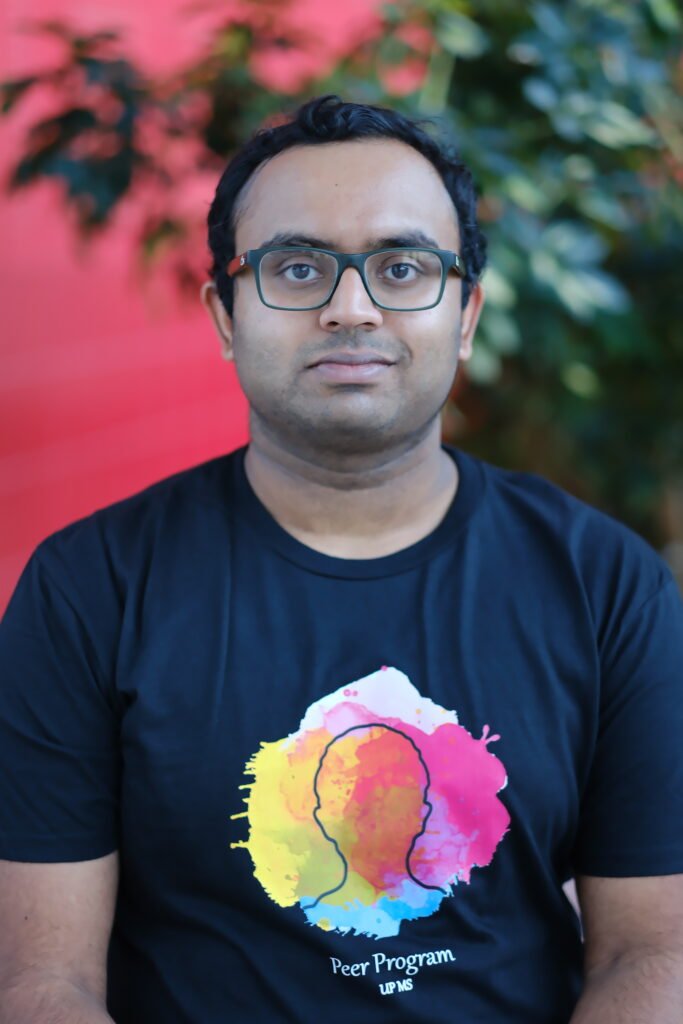
    We’re bringing Prithvi back on the blog to talk about another extracurricular he’s involved in- the Peer programme. We spoke to him just last month about the Unibuddy programme.

    Last semester, my first interview was with Edna who is also a Peer but from the perspective of students seeking help from the Peer programme. Check out that piece here. Applications for interested Peers are now open and today we will be discussing the Peer programme experience from the persecutive of a Peer to shed some light on how the system works for those interested in applying.

    So let’s hear it from Prithvi!


    Q: Thanks for coming back on the blog again Prithvi. So perhaps we can start with an introduction of the Peer programme for those who are unfamiliar with it.

    P: Yes, so the Peer programme is a student organisation within the university, where students (usually lower years) can contact if they have any doubts/enquiries and us ‘the Peers’ address the issues and help them through it.

    Q: Okay! And for how long have you been a Peer?

    P: I’ve been a Peer for 2 years now.

    Q: Oh that’s a while. Definitely not new to this.

    P: Haha yeah, it’s been a while.

    Q: So why did you join? What was the incentive for you?

    P: I joined because I genuinely felt like it would be a good opportunity to help lower-year students with any issues that could come up during their studies. Personally, there were quite a few things I learnt very late in my first few years.

    Q: Admirable intentions! And what exactly do your tasks entail?

    P: Every semester we have a talk with the Dean’s office (particularly the VD of General Affairs and Student Welfare, Prof. Tényi) about how the programme could be modified or adjusted based on our experiences and observations from the previous semester. We also bring up any unique issues that came up and how the school could adjust its policy slightly in order to avoid the issues in the first place. We make ourselves available to communicate with students and address their problems in order to find an ideal resolution. We have events like “Chill with the Peers”, and Lemonade day at the Aula, where students can freely talk to the Peers in an informal setting and get to know us better. This helps them feel more comfortable contacting us in the future, if needed.

    Q: Okay, and how are students paired up with Peers?

    A: On the website, we are listed with a short description of us and as I previously said, our ‘specialisations’. Based on that, once you click the ‘Contact Us’ button and select for your particular issue, the website filters for the relevant Peers that you could be matched to and you can send a message for the Peer you end up choosing.

    Q: Wow, that’s really cool. It sounds well-organised. So what do you do when you can’t help a student, in cases where you are unsure what to do?

    “A good Peer has to be empathetic and caring, and most importantly has to possess a wide range of knowledge on the problems a student could face…”

    P: The Peers have a group amongst ourselves, and with permission we can share the problem on that group. Usually there’s at least one other Peer who knows the solution and can assist. Also, our organisers from the student office are in the group and know what to do (especially in legal matters that may require language or local legal knowledge).

    Q: How much time does it take up per week? Is it something a final year student can participate in or would it be too time-consuming?

    P: Per week, I’d say an hour or so. It really depends on how many students you are dealing with and what the issues are. A final year student is an ideal participant in this programme since at that stage they would have come across a wide range of issues and are therefore thoroughly equipped to assist lower-year students. It’s also not terribly time-consuming alongside the rotational year schedule.

    Q: What kind of events are the Peer programme in charge of organising?

    A: Like I previously mentioned, there’s the Chill-with-the-Peers hot chocolate day, the Lemonade day, and for Christmas the Peer Santa Claus day. We also have events amongst ourselves in the Peer Programme.

    Q: Alright. Let’s talk about the ideal Peer. What qualities would you say make a good Peer?

    P: A good Peer has to be empathetic and caring, and most importantly has to possess a wide range of knowledge on the problems a student could face with regards to immigration issues for the internationals, issues with the R.O and NEPTUN, exams, etc.

    Q: Are there any pros of joining the programme?

    A: Well, you get to develop those teamwork skills, working with the other Peers. You are also able to help others, which is a big way to give back to the student community. The programme offers a scholarship which means you get paid. I wouldn’t say the money is enough to be an incentive on its own but it’s still something if that means a lot to someone.

    Q: Any cons?

    P: I wouldn’t really use the word “con”, but it can be a bit difficult at times when you have your own exams and commitments, and at the same have to help someone else. So I would say having good time management and a freer schedule definitely makes things easier for a Peer.

    Q: Completely understandable. I would have a hard time balancing 2nd or 3rd year courses and having to attend to freshman issues in week 13 of the instructional period.

    P: Exactly.

    Q: So have you had any memorable experiences as a Peer?

    P: There’s not one in particular that I can pick out but in general, it’s truly heart-warming when a student acknowledges that coming to us Peers was worthwhile, and even recommends us to their friends. Many students are shy and hesitant to open up to strangers, so it helps that we rely heavily on word-of-mouth within our community. In a way, it’s like a reward system—positive outcomes motivate us to keep doing more.

    Q: Fantastic! And are there any new events or programmes that students can expect from the Peer programme this semester that you can share?

    P: We will have more events in the main building this semester, as well as having more flyers around the school premises to keep our contact with the student community. So stay tuned! Freshmen who who missed the orientation week can still get the chance to meet us.

    Q: Okay, and is there anything else you would like to add?

    P: The Peers are all in different years, different faculties and different nationalities. They have their areas of specialty as well, so my advice to students is to read the bio of the peers thoroughly, so you can streamline your search about which exact peer to contact, since some will have more knowledge about the topic of interest than others. This just helps you get better information quicker. For those interested in joining the peer programme, just apply. You have nothing to lose and we welcome all our Peers with open arms. You won’t be doing this alone.

    Q: Thank you so much for all this information, and for sharing your experience.


    As I said previously, the call for applications is already out and closes in just a day so hurry, hurry, hurry! The deadline is this Friday, 23:59.

    The official requirements state that you need to be an active student with at least two completed active semesters at any of the courses the University of Pécs Medical School or Faculty of Pharmacy. Current PhD students who received their M.Sc, M.D., D.M.D or Pharm.D. from our university are also eligible.

    You will need to fill the application form together with a motivational letter (500-character min.), after which you can be called for an oral interview.

    I personally think it’s a relatively low-stakes extracurricular to involve yourself in. You get to connect with fellow students and this only evolves our little PTE student bubble for the better. It also gives you the opportunity to practice some of those soft skills you will eventually need in your own career whether you go into clinical practice, research or something completely different. Take the opportunity to diversify your experience!


    Author’s note: My sincere appreciation goes to Prithvi for agreeing to be a part of this blog post and giving us his perspective on this topic.

  • The Transfer Journey: An Interview with Naomi

    The Transfer Journey: An Interview with Naomi

    Hello friends,

    In the past maybe, three months, I’ve shared two posts about transfer opportunities for students who might be considering a change for various reasons. This was something I considered a while ago but never bit the bullet on. Recently, I spoke to a friend of mine Naomi, who transferred out of PTE in 2019. Naomi and I began our medical journey together at McDaniel College Budapest during the premed program. Medical school here in Hungary proved rather tough for us both and we took separate paths – I stuck through it here and she decided to leave.

    Keeping in touch with Naomi, I’ve seen her thrive in her new environment and university. Today, I reached out to her to discuss her experience at PTE and her transfer process. This content is targeted to students who are curious about transferring, what it entails and how it can impact their medical school journey.


    Q: Naomi, thanks for joining me today. Can you tell us a bit about yourself?

    N: Yes. I’m British-Nigerian and I study medicine at the University of Novi Sad in Serbia.

    Q: When were you are PTE and what did you study?

    N: I studied general medicine in PTE from 2015-2019.

    Q: What prompted you to leave?

    N: I made the difficult decision to part ways with PTE due to the overwhelming stress that accompanied exam periods. It felt like no matter how much I studied, I couldn’t quite crack it. Sometimes it was those ultra-specific questions from teachers that threw me off, or just missing one answer despite nailing everything else. I felt my knowledge was sufficient enough to pass. I covered everything- when I mean everything, I mean I would read textbooks, students’ notes and even attend private classes.

    Q: Yes I do remember how it was. Cracking the exam format here is an art of its own. I personally didn’t fully grasp it until 4th year.

    N: Right. But despite feeling confident in my knowledge, the examiners seemed to see things differently. It took a toll on my mental well-being, making me doubt myself even though I knew I wasn’t lacking in intelligence. Eventually, my parents intervened and recommended that I transfer to another school for my own sake. Despite my reluctance to leave behind the friendships and routines I had established in Pécs, I took their advice and embarked on a new chapter elsewhere.

    Q: What schools did you consider and why did you choose your current school?

    N: I considered Victor Babes University in Timisoara, Romania due to its proximity and study program. The study program/curriculum is very similar to University of Pecs. I was not accepted because I did not fit the criteria. I got in touch with a medical school agency. They had connections with a list of schools, I hadn’t considered. They recommended Dnipro Medical Institute. I studied in Ukraine for two years until the war broke out. After the war broke out, I was devastated and was very close to giving up on finishing medicine until I stumbled upon two universities in Serbia; University of Belgrade and University of Novi Sad. I finally went with University of Novi Sad because the study program (same subjects) was also similar to University of Pecs. Additionally, unlike PTE, which has only 2 exam periods per year, UNS offers 7-10 exam periods in a year. The city is also small and everything is within reasonable reach. You can literally walk everywhere.

    Q: Wow! 7-10 exam periods sounds insane, knowing what it’s like here in PTE.

    N: Yes, but they are much shorter and it helps students prioritise and organise their exams efficiently.

    Q: What was the application process like? 

    N: The application process was very easy and straightforward. I didn’t use an agency to apply to University of Novi Sad. Everything about the transfer process was on the school website. I didn’t do an entrance exam. I think first year students have to do an entrance exam. They will be tested on Biology and Chemistry, as well as their English language skills. I paid 50 euros for the application process. I had to submit my transfer application form, a student status certificate in the previous academic year, a transcript of records, the detailed study program – syllabus, a copy of my passport, my birth certificate and the proof of paid application fee – the 50 EUR I already mentioned. Quite a few of these documents had to be officially translated to Serbian. If I had any questions, I was able to get in contact with the school through email and they replied very quickly.

    Q: What year where you in at PTE when you transferred to Dnipro?

    N: I was in my 4th semester at PTE before transferring to Dnipro Medical Institute.

    Q: What year were you accepted into?

    N: I was accepted into the second year in Dnipro Medical Institute. I also finished my third year in DMI. After the war broke out, I continued my studies in University of Novi Sad and entered 4th year.

    Q: How did you find the process of moving? Were you helped in anyway by UNS or did you have to figure things out there by yourself? Did you have any friends there prior to moving to help you?

    N: Moving to Novi Sad wasn’t a big deal for me. Beforehand, I did a ton of research about Serbia, so I pretty much knew what to expect. UNS helped out with the visa process, so that was easy. But as for getting to know the city, I did all that on my own. And to top it off, I didn’t know a single person there before I moved.

    Q: How did you find the transition process as a previous PTE student, academically and otherwise?

    N: I adapted to the city very quickly. It’s quite similar to Pécs but a bit bigger, and everything is conveniently close by. The bus system is easy to navigate, and taxis are readily available if needed. The locals are incredibly friendly and always eager to assist foreigners; they truly appreciate and welcome all visitors. Plus, you’ll find that most people in Novi Sad speak English fluently, so communication isn’t an issue. Novi Sad is just a 30-minute train ride away from the main city, Belgrade, or about an hour by car. Sometimes, I head to Belgrade on weekends to meet up with students from other universities.

    As for the education system, I’m really impressed. The teachers are highly knowledgeable and proficient in English, always willing to address any questions we may have. We have plenty of opportunities to interact with patients, examining various cases and learning how to approach different scenarios. The emphasis is on developing our critical thinking skills, understanding diseases, making diagnoses, considering differential diagnoses, and exploring treatment options.

    Q: Please, tell us a little bit about the school system and how it differs from here.

    N: So the academic year starts in October and ends in May. We have two semesters, winter and spring. During the semester, we have lectures and practicals. We usually have 20 weeks of learning. After winter semester, we have two weeks of exams. You can choose which exams you would like to take but you cannot choose the date of your exams like in PTE. You only have one chance to pass each exam in an exam period. During the spring semester, there’s an exam period in April, you can choose to do the exams you didn’t pass during the winter semester then. After the spring semester, we have exams in June, July, August, September and October. You can choose to spread your exams during these months. The requirement is you should have 37 credits done after each year.

    Q: Are there opportunities for clinical practice outside of class? Something akin to the summer practices we have?

    N: Yes. If we would like to get more clinical practice, the school offers us the opportunity for a summer practice. We can also contact the doctors and ask if they are free during the summer to observe them. UNS also organises events where we can practise our clinical skills as well.

    Q: How are you able to interact with your peers and classmates? Do you make Whatsapp groups or Facebook groups like here?

    N: Yeah, it’s pretty much the same. We interact with each other using WhatsApp and Facebook. We have Facebook groups with all the students in my year. We also have a year representative who gives us relevant information about classes and such.

    Q: PTE prides itself on being very multicultural, which it absolutely is. What’s the student community in UNS like? What nationalities dominate? Do they have different programmes for different languages the way we have?

    N: University of Novi Sad medical faculty is a rather small community. I would say due to the war in Ukraine, the student community here is growing both in number and diversity. We have students from Italy, Greece, Croatia, Slovenia, Bosnia, Nigeria and India. No nationality dominates one from the other. In my school, we have two programmes- Serbian and English.

    Q: Are there any things you like at UNS better than in PTE? 

    N: Here, they really prioritise connecting with patients. We spend a lot of time digging into their medical history, which I think is super important. It’s not just about cramming or memorising information from textbooks; they really want us to be able to spot illnesses in real life. They emphasise knowing how to gather the right details from patients so we can diagnose and treat them effectively and quickly. It’s all about being hands-on and practical, you know?

    Q: Oh that’s great. I do sometime feel our knowledge here can be heavily theoretical, which is good but patients don’t always present as textbook cases so it’s like what next?

    N: Yup, I felt that way too at PTE.

    Q: Okay, and on the more unsavoury side, what are the things that you miss from PTE at UNS?

    N: Back in PTE, we had a plethora of study spots, which I really miss in our medical faculty here.

    Q: That is surprising. Students here still complain about how little spots we have.

    N: Then you can imagine. It’s even less here, and it’s quite tough with just one crowded study room, especially during exam crunch time. And you know what would be great? More student-led societies at our school. It would really enhance our interactions and connections with each other.

    Q: UNS needs to take notes!

    N: *laughs* Yeah!

    Q: So, how have you found the language barrier? How does it affect learning? Did you have to learn Serbian to catch up? Do you have to use it to interact with patients in the hospital?

    N: Honestly, the language barrier isn’t much of an issue for our learning. The teachers here are excellent at English, so we’re all good on that front. Personally, I’ve been here for two years and I only know a handful of Serbian words. It’s pretty bad, I know, but between classes and everything else, I just haven’t had the time to really study the language *laughs*. Unlike PTE, our university doesn’t make Serbian a compulsory subject but I wish they did. It would definitely come in handy when interacting with Serbians outside of school. Usually if the patient doesn’t speak English, the teacher or a Serbian student would translate. However if you would like to learn Serbian, there is a language club in the main university campus but you have to pay for that.

    Q: Is there a possibility for extracurricular activities? Like research, surgical society, these kinds of things?

    N: Absolutely. We do have a range of extracurricular activities available, which add a lot to our learning experience. For instance, the school has been proactive in organising various events like conferences and clinical practices. One noteworthy initiative was bringing in doctors from countries like the US and UK to share insights into their specialised fields. It’s incredibly insightful to hear first-hand from experts in different medical domains. Moreover, there have been specific events tailored to help with our practical skills. Last year for example, we had an event where we got hands-on practice in nursing and surgical skills. It was a fantastic opportunity to apply what we learned in class in a simulated, yet realistic, environment. These kinds of experiences really complement our academic learning and prepare us for the practical aspects of our future careers in healthcare.

    Q: You are now in the rotational year. Are you able to complete it only in the university clinics or also in other places? Any opportunities for exchange programmes?

    N: So, if I’m keen on doing my rotational year in another country, it’s definitely possible, but it’s more of a DIY affair. I’d need to reach out to the schools abroad and handle all the planning and logistics myself. However, the school does have some established connections with a few institutions abroad. For instance, just this year, there was an opportunity for students in their 5th and 6th years to go to Thailand for their clinical rotations. And then there’s Erasmus, which is a great program for international exchange. We actually have students from Italy who come here to spend a year studying. It’s a wonderful opportunity for cultural exchange and expanding our perspectives in medicine.

    Q: Do you have to prepare a thesis as a graduation requirement?

    N: Yes, I do have to prepare a thesis as a graduation requirement. It’s the last thing I would have do in sixth year. After that, I’m freeee!

    Q: Naomi, I’m really so happy for you. I know how it was for us, adjusting to this crazy rigorous system, seeing how much work was put in with the results just not adding up. It takes a toll on you and you start wondering if you’re an oversight of sorts- just an impostor who somehow slipped through the cracks. I want to ask and maybe it’s a silly question after hearing all these but do you feel you made the right choice for yourself to move from PTE?

    N: Absolutely, I’m convinced I made the right decision. Staying would’ve only worsened my mental well-being, I think. But you know, I’m a firm believer in the saying that everything happens for a reason and since making the move, I’ve crossed paths with some truly incredible people. Honestly, I feel more confident now than I ever did back in PTE. So yeah, without a doubt, it was the best call for me.

    Q: Alright! And one last question- do you have any advice for those who are considering making such a move whether to UNS or somewhere else?

    N: I’d say don’t rush into any decisions. I get it, it feels like time’s ticking away. But seriously, take your time. Look into every little detail of each school you’re considering transferring to. And here’s a tip: reach out to students already studying there. They’ll give you the real scoop on what the school’s like. But whatever you decide, make sure you’ve got a solid plan. And remember, don’t give up. Things have a way of working out in the end. You’ve got this!

    Q: Is there anything else you would like to add?

    N: Thank you for giving me the opportunity to talk about my experience. It was nice.

    Q: And thank you as well for sharing your perspective. I’d love to do a follow-up with you as you progress in your career after UNS.

    N: Of course. I’ll be happy to be a part of that.


    That’s the interview for you.

    If you are interested in UNS, I did the research and unfortunately, the deadline for transfers to begin in the next semester ended in June. However, I have a post detailing transfer possibilities for those who are looking to transfer both within and outside Hungary, which you can access here and here.

    One thing to take note of is that many universities can only accept students based on the similarity between the medical programmes. This is one reason why universities in the UK (which typically offer 5-year MBBS programmes) or the US (which typically offer 4-year MD programmes post-grad), for example, do not accept transfer students from our programmes.

    Also, you need to accept the possibility of having to lose a year when you transfer. While many of the programmes are similar, the order may not necessarily be. Some medical schools start their anatomy course from the 1st semester, while we have it from the second. Some might have immunology in the 3rd semester while we have it in the fourth. Some might even have only one or three semesters of microbiology or pathology while we have 2, so it’s something you will need to keep in mind.

    Finally, I want to add that if you are trying to escape a possible termination or extra year, transferring is not necessarily the best option for you. Many of these universities also have academic requirements for transferring. Some of them require proof that you are eligible to continue in the next semester in your current institution, as well as your transcript. So transferring should not be your lifeline to keep a bad academic record going.

    This is my third blog post concerning transfers. Before making any of these posts, I wrestled with the idea a little bit. I recognise the fact that doesn’t look too good to make posts that essentially encourage or provide information to current students of my alma mater to transfer. So I just want to quickly clarify this:

    When I initially started this blog, I did it as a thing for students like me- those away from home with nothing but a dream, struggling through it, no idea of how things worked, barely knowing what happens outside of the classroom and how to boost their uni experience. I wanted to provide some of the information I didn’t have then. I have to give my props to PTE and say a lot has changed since I started and I have seen changes made and initiatives started to support students, especially those in the international programmes. That being said, I think of choosing a university like buying a home. It will hold you as you go through some of the most difficult days of your life and also some of the best and most rewarding days of your life. I believe it is entirely possible for a university and its system to not be your perfect fit. Naomi’s a great example of that. If you realise medicine is not for you, that’s a beneficial realisation to come to and you should definitely act on that. On the other hand, if you have the interest, passion and drive like Naomi, perhaps you’re just not in your right home. So if you need to leave, do so. There’s no use forcing a square peg into a round hole. Find your home.

    Author’s note: I am ever so grateful to Naomi for agreeing to this interview and being willing to share this personal and trying experience. I wish her the best of luck as she wraps up her medical training in Novi Sad and moves even closer to her dream.

  • Rotational Year: Psychiatry, the Case Reports

    Rotational Year: Psychiatry, the Case Reports

    Hi 6th years,

    If I have done my calculations correctly, you just completed your third week of rotations. Congratulations!!!

    For those who started with Psychiatry, you probably just finished that rotation and had to do the psychiatry examinations, and fill in the case report forms.

    Here, I am uploading my forms as a SAMPLE to give some direction in case you are a bit lost on how to log it.

    If you are unable to find the form templates, visit the psychiatry department’s webpage here. Go to “Download” >> “Gradual” and then scroll to the bottom of the page to access it.

    I will say, the forms did not need to be submitted during the examination, contrary to what I and many others thought. We only had to present the case during the exam (in my case, only once case was presented) and were asked questions based on it.

    All that to say, it’s not such a big deal. For the exam, I wish you the best of luck and stay tuned for the internal medicine forms.

    Author’s note: The content shared on this blog, including the project and any related materials, is intended solely for informational and educational purposes. No permission is granted for the use of my work in any form without explicit written consent.

  • International Student Ambassadors- An Interview with Amr and Faith.

    International Student Ambassadors- An Interview with Amr and Faith.

    Hi, fellow PTE students!

    Exciting news from the International Center: they put out calls for new International Student Ambassadors, and believe me, you don’t want to miss out on this opportunity. This is one more thing to add your resumé but even better, it’s a chance to level up your skills while representing our university.

    2023/2024 ISAs

    (more…)
  • Theses Experiences: 6th Year Students Speak.

    Hello! This one is for the last-minute people scrambling for thesis topics and supervisors, and also for other students who are curious about the thesis experience in different departments. I was able to gather experiences from a few current 6th year medical students as a guide for students interested in completing their theses with a particular department or supervisor. I asked about the process of securing a supervisor, details of the thesis and details of the thesis defence. Some students have also opted to share their thesis and some to be contacted with further questions about their thesis.

    (more…)
  • Introducing Questioshare: A Student Research Platform.

    Hi PTE students,

    It’s already week 12 and stress levels are climbing rapidly. It’s coming to that time we all dread. Wishing much luck to everyone already deep in midterm and exam preparations.

    Today, I would like to present a small project born out of my experience with research. I began the thesis journey as early as February 2022, which was in the second semester of my 4th year. It was my first time being involved in anything research-related. I didn’t have much clue on what exactly to do and what direction to take the thesis work. After consultations with my supervisor, we decided on a survey study. This would mean quite a bit of work. I had to collect data, analyse and present it. I watched a lot of Youtube videos to acquaint myself with the type of work I would have to perform. I also received relevant material from my supervisor to guide me.

    As of April 2024, I am completely done with everything related to the thesis. Since then, I have been involved in one other survey study. The hardest part both times has been survey distribution and data collection. We have quite a few uni-oriented Facebook groups here and there, and I would see posts from students in these groups asking their fellow students to fill their surveys. I would fill a few out here and there when I had a minute to spare and I admittedly scrolled past quite a few as well.

    Having to distribute surveys myself turned out to be a humbling experience. I once walked around the main University building for 2 hours distributing QR codes to students sitting around. I must have distributed at least 40 copies of these QR codes that day and only got 2 responses from this venture. I reached out to parties that I thought might be useful and supportive in my research. Nothing came out of that either. The most effective way, it turned out, was distributing amongst friends and via social media, and asking these participants to distribute amongst friends as well.

    After going through this experience twice, I was able to collaborate with a dear friend of Aula Conversations to create a platform for students’ questionnaires to be distributed amongst fellow students. It’s like a big virtual bulletin board where we can all help each other out. It is called Questioshare and is now live here.

    How it works

    It’s pretty simple. All you have to do is visit the page and fill in the relevant details regarding your survey.

    Once you submit it, it is entered into the system to be verified. You will receive a prompt message stating that it is pending verification, after which it can then be displayed on the page.

    Available questionnaires can be sorted by major/field, by title or by added date.

    So that’s Questioshare. Whether you’re knee-deep in thesis writing or embarking on your first research project, Questioshare is here to simplify the process and make your journey a whole lot smoother.

    Now, here’s the deal: Questioshare is all about teamwork. It only works if we as students have each other’s backs. That means taking a second every now and then to see if there’s a survey you can chip in on, and passing it along to friends who fit the bill. Think of Questioshare as our secret weapon—a platform where we can rally together and make each other’s lives a little easier. And a little note to add, it’s not just for the medical students; all PTE students are welcome to jump on board! Let’s show some solidarity and make research a breeze for everyone.

    Author’s note: Questioshare could not have materialised without the work and support of a dear friend and I am profoundly grateful for their invaluable contribution in turning this vision into reality.

  • US Residency Pathway: ECFMG Certification

    Hello dear PTE students!

    If you are applying for residency in the US, you probably know by now that you have to begin with the ECFMG registration and certification process.

    (more…)